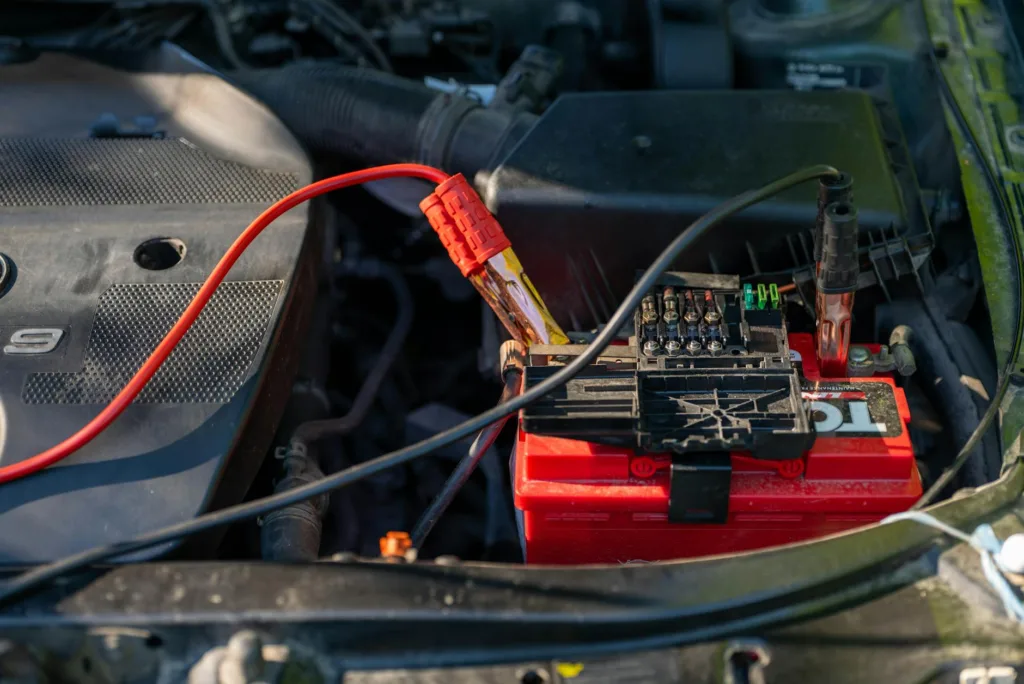
There’s nothing worse than turning a key and hearing that slow, tired grind that tells you the battery is on its last legs. People shop for the best battery tester for car because batteries fail quietly and at the worst times: a freezing morning before work, or the night you’re loading the car for a road trip. A good tester saves time and money by separating a tired battery from a charging-system problem, and it gives you confidence that a jump or replacement really solves the issue.
Buyers commonly make two mistakes. First, they assume any cheap voltmeter is enough, then get surprised when a “good” voltage reading masks poor cold-cranking performance. Second, they pick a tester that can’t handle their battery chemistry or voltage, which leads to confusing results. What matters most is accuracy for the battery types you own, clear guidance when you’re under the hood, and clamps and cabling that reach the battery without tugging on terminals. Different buyers have different priorities: a DIYer wants simple “Good/Replace” guidance, a fleet tech needs 12/24V support and memory, and a shop will prefer built-in printing or waveform analysis.
If you want one recommendation to start with, the TOPDON BT200 stands out for near-lab accuracy and a sunlight-readable color screen that makes diagnostic calls straightforward during a roadside check.
If you’re short on time, the comparison table below gives a quick snapshot of the top picks and links to each full review so you can jump to the model that fits your needs.
Best Battery Tester For Car Comparison Table
| Product | Best For | Main Strength | Key Specs |
|---|---|---|---|
| TOPDON BT200 | Best Overall | Professional accuracy, 12/24V support | 100–2000 CCA, Color LCD, -4°F to 140°F |
| FOXWELL BT705 | Best For Shops | Large screen, solo cranking diagnostics | 100–2000 CCA, 12/24V, long cable |
| ANCEL BA101 | Best Value | Clear results, strong protections | 100–2000 CCA, SOH/SOC, multi-language |
| KONNWEI KW208 | Best Budget | Low cost, reliable basics | 100–2000 CCA, plug-and-play |
| ACCLOPE BT60 PRO | Best Multi-Voltage | 6V/12V/24V support, QR cloud reports | 2–120Ah, 100–3000 CCA, waveform |
| TOPDON BT100 | Best Compact | Small footprint, intuitive LEDs | 100–2000 CCA, LED indicators |
| MOTOPOWER MP0515A | Best Feature Set | Color screen, waveform logging | 100–2000 CCA, 3″ screen, printing option |
| TopDiag BT300 | Best 12/24V Budget Pro | 12/24V support, software updates | 20–2000 CCA, USB updates, multi-language |
| MOTOPOWER MP0514A | Best for Simplicity | Plug-and-test simplicity and LEDs | 4–20V range, LCD + LED indicators |
The table gives a fast comparison; read on for full breakdowns that explain who each tester actually suits and where they perform best.
1. Best Overall: TOPDON BT200

One reason this option stands out is how it blends lab-grade accuracy with a user-friendly interface. I’ve used the BT200 on a bitterly cold morning to verify a battery that read 12.3 volts but failed the cranking test, and again during a pre-trip RV check where the color display and clear “Good/Replace” prompts made a quick decision painless. The BT200 uses advanced conductance technology so readings are reliable across flooded, AGM, GEL and deep-cycle batteries, and its wide operating temperature range means it still works when you need it most.
For buyers who prioritize precision and versatility, the BT200 supports both 12V and 24V systems and provides cranking and charging tests in a tidy, rugged package. It’s bulkier than the pocket testers but still handheld, with copper clamps and memory functions that pros will appreciate. The sunlight-readable 2.4-inch color screen is a real comfort when you’re bent over an engine bay at midday. Expect pro-level diagnostics without the pro-level learning curve.
Pros
- Near-lab accuracy for 12V and 24V batteries
- Sunlight-readable color display with clear prompts
- Wide temperature operating range for reliable cold-weather testing
- Durable build, copper clamps, memory function
- Three-in-one tests: battery health, cranking, and charging
Cons
- Higher cost than entry-level testers
- Bulkier than compact LED testers
If your goal is one tool that covers cars, trucks, and occasional 24V checks for a trailer or diesel vehicle, the BT200 performs the toughest tasks without fuss. It is ideal for DIYers who want confidence and for small shops that need consistent, repeatable readings. Skip it if you only need a barebones voltage check to keep in a glove box, since there are cheaper pocket options for that use.
To buy this product, click here.
2. Best For Shops: FOXWELL BT705
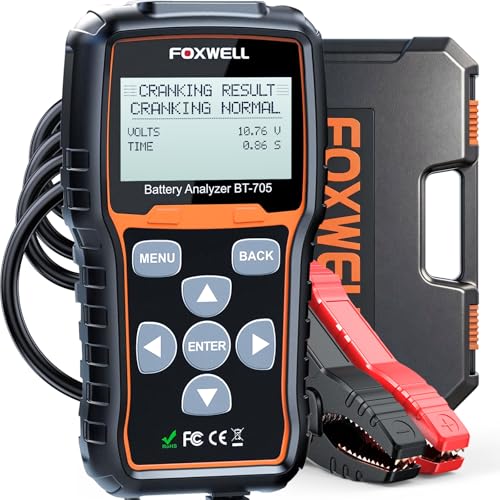
If your workday includes dozens of battery checks, this model earns its place on the bench. I once used the BT705 when diagnosing a flaky starting problem on a pickup during a cold-spell fleet run; the long cable and big display let me sit in the cab and watch cranking metrics in real time. Another time, the step-by-step prompts helped a junior tech isolate a bad alternator quickly, saving time on the repair ticket. The unit is built with a large cable and a long reach so one-person testing is simple, and the extra-large screen makes reading cranking waveforms straightforward.
The BT705 is a mature product that puts usability first. It checks 12V and 24V batteries, reports SOH, SOC, internal resistance and alternator output, and gives explicit “Good/Replace/Charge” guidance. It shows cranking data live so you can watch voltage collapse during starter engagement and diagnose whether the battery or starter is at fault. For shops, that translates to faster throughput and fewer call-backs.
Pros
- Large, clear screen that supports solo diagnostics
- Long cable for one-person cranking tests
- Accurate readings for 12V and 24V batteries
- Robust housing and copper-plated clamps for frequent use
- Clear action prompts reduce guesswork
Cons
- Pricier than consumer handhelds
- Heavier to tote around for occasional users
This is the model to pick for a busy garage or a serious DIYer who services multiple vehicles. It handles routine diagnostic pressure and gives data that’s usable when billing customers. If you only check one personal car a few times a year, the extra capability may be overkill.
To buy this product, click here.
3. Best Value: ANCEL BA101

For buyers who prioritize straightforward diagnostics without paying a premium, the ANCEL BA101 is a familiar and practical pick. I reached for one during a weekend camping trip when a boat battery refused to crank; the BA101’s readable screen and SOH/SOC readouts instantly told me the battery had low charge and high internal resistance. On another occasion it caught a marginal alternator output that generic voltage checks missed. The unit supports global standards and multiple battery types, and Project Farm coverage has helped validate its real-world performance.
This tester uses a simple black-and-white display with adjustable contrast and direct clamp power so you never worry about charging the unit. It also includes protections for reverse polarity and overcurrent, which reduces the chance of a costly mistake when clips slip. If you own more than one type of vehicle, the BA101’s broad compatibility makes it a practical in-garage companion.
Pros
- Excellent value for the feature set
- Clear SOH/SOC readouts and CCA info
- Robust safety protections and reinforced housing
- Works across many 12V battery standards
- No internal battery to recharge, it runs off the tested battery
Cons
- Not for lithium starter batteries or 24V systems
- Screen and UI are less modern than color displays
Pick the BA101 if you want reliable testing without grooming a toolset. It’s perfect for multi-vehicle households, boat owners, and campers who want dependable readings at a reasonable cost. If you need 24V capability or touchscreen features, look at more expensive options.
To buy this product, click here.
4. Best Budget: KONNWEI KW208

If your priority is the lowest possible entry price without sacrificing the essentials, the KONNWEI KW208 is a strong contender. I keep one in a neighbor’s toolbox for quick checks; on a rainy morning it saved us from calling a tow by confirming the battery was the culprit before we attempted a jump. Another time, it flagged a battery with poor cold-cranking ability even though voltage looked acceptable at idle. Its galvanised alloy clips and plug-and-play design make testing painless for beginners.
The KW208 covers the basics well: SOH, SOC, voltage, internal resistance and cranking and charging system tests. The vendor claims high accuracy and the unit’s simplicity is its biggest selling point. It turns on when clamps attach so dead batteries can still be tested without extra steps. For occasional users the KW208 provides fast, usable answers and clear advice about recharge or replacement.
Pros
- Very affordable while covering standard tests
- Plug-and-play operation, tests dead batteries too
- Galvanized alloy clips for durable contact
- Provides actionable replace/recharge advice
- Supports common battery types
Cons
- Limited to 12V batteries and standard CCA ranges
- Fewer advanced diagnostics than premium models
Choose the KW208 if you need a reliable backup tool or a simple tester to keep in the garage. It is ideal for learners, low-use vehicles, and those who want straightforward guidance. Upgrade if you need 24V checks, waveform analysis, or cloud reporting.
To buy this product, click here.
5. Best Multi-Voltage: ACCLOPE BT60 PRO

This model shines when a single tester must cover motorcycles, cars, and light trucks. I once used the BT60 PRO to check a 6V motorcycle battery before a weekend cruise and then switched to a 24V truck battery for a fleet check without missing a beat. The ability to test 6V, 12V and 24V batteries plus starter lithium chemistries expands what a single tool can do, making it useful for mixed fleets or households with diverse vehicles.
The BT60 PRO offers waveform displays and QR cloud report sharing, which is handy for documenting results without extra software. If you’re a tech who likes to keep test records or a mobile tech servicing customers at their driveway, the QR cloud print feature saves time and creates a clean record for the customer. The unit also gives detailed SOH/SOC data and supports a wide CCA range, which helps when you are working across vehicle classes.
Pros
- Supports 6V, 12V and 24V testing and many battery chemistries
- Waveform analysis and QR cloud report for easy record-keeping
- High claimed accuracy and robust clamp design
- Good screen size and menu system for professional use
- Memory function and multi-language support
Cons
- LiFePO4 CCA numbers may be limited in accuracy
- Cloud-based reporting depends on user workflow and internet access
Buy the BT60 PRO if you need a single, flexible tool to cover multiple battery voltages and generate shareable reports. It’s particularly strong for mobile techs and fleet managers. If you only test a single car, its broad feature set may be more than necessary.
To buy this product, click here.
6. Best Compact: TOPDON BT100

If you want something small that still offers trustable diagnostics, the BT100 earns its keep. I carried one in a glove compartment during a cross-country trip; when a van’s dash lights flickered after idling, a quick BT100 check showed the battery was weak and the alternator output was acceptable. Its LED color indicators and menu-driven interface give instant direction without wrestling with menus. The compact size means it hides easily in storage without rattling around.
The BT100 covers the necessary battery health metrics and offers a cranking test and charging system check. It’s designed with safety in mind, with spark-proof clamps and reverse polarity prevention. While it lacks a large color display, the combination of simple hardware, dependable clamps, and fast results makes it a strong portable option for weekenders and commuters.
Pros
- Compact and easy to store in a glove box
- Quick, accurate readings with visual LED cues
- Safe clamp design and reverse polarity protection
- Good for a wide range of vehicle types
Cons
- Smaller display and fewer advanced features
- Not aimed at shop-level throughput
Choose the BT100 if portability and ease of use matter most. It is perfect for drivers who want to perform quick health checks and for DIYers who need a reliable compact tester. Shops and power users will likely prefer larger, feature-rich analyzers.
To buy this product, click here.
7. Best Feature Set: MOTOPOWER MP0515A

This model is for techs who like data and visualization. I used the MP0515A when a customer reported intermittent starting issues; the real-time waveform display helped show that voltage dipped in a way consistent with a weak cell rather than a bad starter. On another check, the color LCD made it easy to hand a printed report to the owner and point out alternator output under load. The unit’s real-time wave and data printing abilities lend themselves to diagnostic storytelling when you need to explain repairs.
The MP0515A includes a 3-inch color screen and supports multiple languages. It’s built to show internal resistance, SOC, SOH and provide a test conclusion. The real-time waveform feature and optional data printing make it a standout for users who want to retain or share test evidence with customers, or for thorough pre-purchase used-car checks.
Pros
- Color LCD and real-time waveform display
- Data printing and multi-language support
- Fast, clear health and charging diagnostics
- Useful for customer-facing reporting and documentation
Cons
- Feature set can be overwhelming for casual users
- Higher cost than basic testers
The MP0515A is a natural fit for independent mechanics and enthusiasts who value tangible diagnostic records. If you run a small shop or frequently sell used cars, the printing and waveform functions help you prove findings. If you only need a glove-box checker, a simpler model will do.
To buy this product, click here.
8. Best 12/24V Budget Pro: TopDiag BT300

The BT300 is a useful compromise between budget pricing and expanded capability. I used one to screen batteries for a small pickup fleet and appreciated the 12/24V flexibility and USB-upgrade path that keeps firmware current. Another memorable use was a charging-system test where the BT300 quickly differentiated a weak battery from a failing alternator diode. The screen is bright and the one-button operation is friendly for technicians who prefer simple workflows.
This model supports common battery standards and provides standard and quick tests depending on how much input you want to give the device. It supports multiple languages and firmware updates via USB, which is helpful for compatibility improvements over time. For shops or serious DIYers who need 24V testing without heavy investment, the BT300 delivers strong real-world value.
Pros
- 12V and 24V support at a budget price point
- Software updateable via USB for future compatibility
- Clear backlit LCD and one-button operation
- Suitable for mechanics and fleet use
Cons
- USB updates require a PC and occasional maintenance
- Less feature-rich than premium TOPDON models
Opt for the BT300 if you need 12/24V testing on a budget and want a device that can be improved via firmware updates. It’s an efficient choice for mobile technicians and small shops that need extra voltage support without paying for high-end hardware.
To buy this product, click here.
9. Best For Simplicity: MOTOPOWER MP0514A
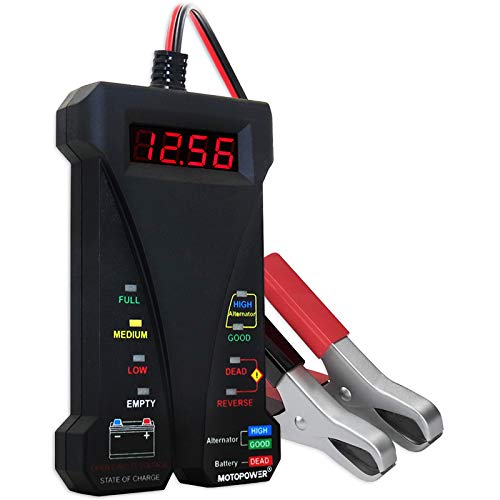
If a simple, reliable voltmeter with clear LED guidance is what you need, this compact Motopower model delivers. I kept one in a rental truck kit and used it to quickly verify alternator output after a passenger reported dimming headlights; the LED indicators and precise LCD voltage reading provided instant reassurance. Another time, its short cable and comfortable rubber-painted body made a cramped engine-bay test quick and safe. It’s a pocket-friendly tool that gives reliable voltage and alternator checks without complexity.
The MP0514A depends on a 4-digit LCD plus LED indicators that summarize battery and alternator status. It includes reverse connection protection and over-voltage protection, which reduces risk for beginners. The light weight and modest footprint make it a sensible emergency tool to keep in a glove box or toolbox without adding clutter.
Pros
- Plug-and-test simplicity with precise voltage resolution
- Compact, lightweight, and easy to store
- Reverse polarity and over-voltage protection
- Intuitive LED indicators for quick decisions
Cons
- Less detailed than conductance-based testers
- Not intended for heavy shop use or 24V systems
This Motopower unit is an excellent emergency or travel companion for straightforward alternator and battery voltage checks. Pick it if you want something safe and simple to confirm whether your battery is holding charge or if the alternator is producing sufficient voltage.
To buy this product, click here.
Best Battery Tester For Car FAQ
How does a conductance tester differ from a simple voltmeter?
Conductance testers measure how well a battery can deliver current and infer internal resistance and cold-cranking capability; they can tell you about battery health even if voltage looks normal. A simple voltmeter only reports voltage at rest or during cranking and can miss batteries that have low capacity despite acceptable voltage.
Can these testers check lithium starter batteries?
Some models support certain starter lithium chemistries like LiFePO4 for voltage and health checks, but not all guarantee accurate CCA equivalents for lithium. Check the product specifications—models like the ACCLOPE BT60 PRO list limited lithium support while others are strictly for lead-acid types.
Do I need a 24V tester?
Only if you work on vehicles with 24V electrical systems such as larger trucks, some RVs, or certain commercial equipment. For most passenger cars a 12V-only tester is fine, but a multi-voltage unit buys flexibility for mixed fleets.
How important are clamp quality and cable length?
Very important. Strong copper or copper-plated clamps ensure low-resistance contact and consistent readings. Longer cables and good clamp reach let you perform one-person cranking tests from the driver’s seat and reduce awkward stretching that can lead to poor connections or slipped clamps.
Is waveform analysis worth the extra money?
Waveform analysis gives visual insight into cranking and charging behavior and helps separate battery, starter, and alternator faults. It’s valuable for shops and techs who need to justify repairs or diagnose ambiguous failures; for basic home checks, it isn’t essential.
Will a battery tester drain my battery?
No. These testers draw power briefly from the tested battery to take readings; they do not significantly drain a healthy battery. It’s still good practice to avoid long diagnostic sessions on a marginal battery without charging it afterward.
How often should I test my car battery?
Test at least twice a year, and before long trips or seasonal storage. Batteries approaching three to five years old benefit from more frequent checks, especially if you live in extreme climates where capacity can degrade faster.
Can a tester tell me if my alternator is failing?
Yes. Most testers include a charging-system test that reports alternator output and can detect issues like undercharging or diode faults. For conclusive alternator diagnosis you may still want oscilloscope-level analysis, but for most users the tester’s charging test is sufficient.
Final Verdict
After weighing accuracy, features, and real-world usability, the TOPDON BT200 is my top pick for most people. It marries high accuracy with a sunlight-readable color screen and handles both 12V and 24V systems, which makes it versatile enough for home mechanics, mobile techs, and light commercial work. If you want one tool that handles everything from a cold morning crank test to pre-trip checks, the BT200 is the most balanced choice.
For budget-conscious buyers the KONNWEI KW208 and the MOTOPOWER MP0514A provide reliable, straightforward testing at low cost. If you run a shop or need one-person cranking diagnostics and more robust reporting, the FOXWELL BT705 and the MOTOPOWER MP0515A offer the bigger screens and workflow features that speed through multiple checks. Match your choice to how often you test, what voltages you need, and whether printing, waveform analysis, or cloud reporting matter for your workflow. With any of the testers above, regular checks will help you avoid roadside surprises and keep battery-related repairs focused on the right component.