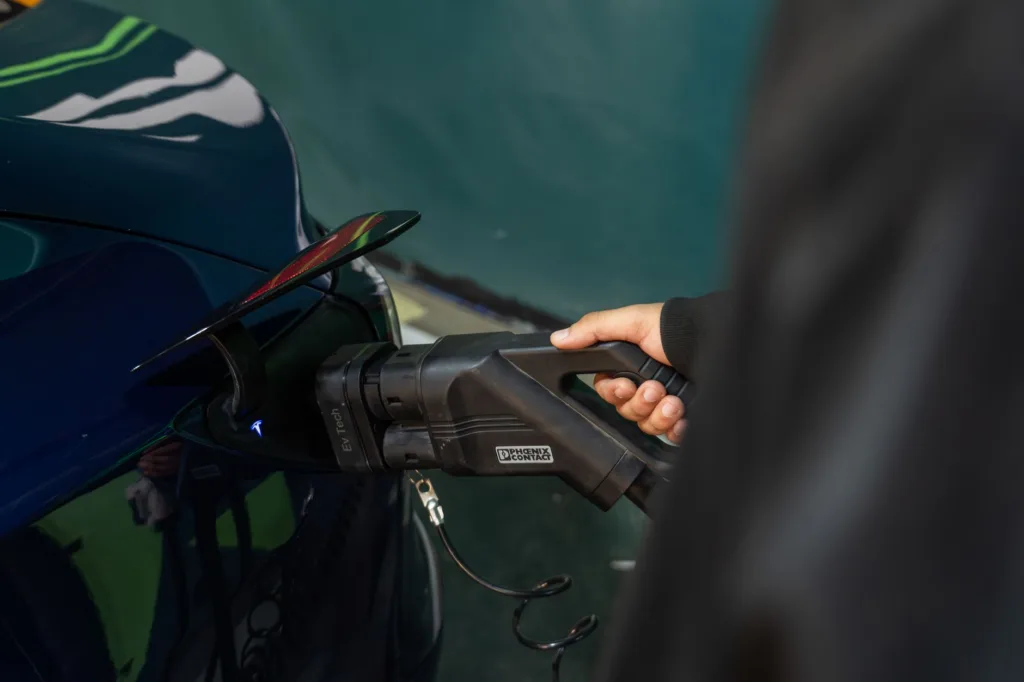
The moment you get serious about home EV charging, a NEMA 14-50 setup starts looking awfully appealing. It is the sweet spot many drivers chase because it can deliver much faster charging than a basic wall outlet without pushing you straight into a hardwired installation. Plug in after dinner, hear that satisfying click, and wake up to a battery that feels ready for the week. That is the promise, anyway. The catch is that plenty of buyers grab the first charger that says “40A” or “Level 2” and miss the details that actually shape daily use, like plug type, connector compatibility, cable length, app stability, weather resistance, and whether the unit is truly comfortable to live with in a cramped garage.
A common mistake is treating every NEMA 14-50 EV charger as interchangeable. They are not. Some are better for Tesla owners who want a native NACS plug. Some make more sense for J1772 vehicles from Ford, Hyundai, Kia, BMW, or Chevrolet. Some are travel-friendly and easy to toss in the trunk, while others work better as semi-permanent wall-mounted home chargers. The smartest choice depends on your car, your outlet, your breaker, your parking layout, and how much control you want over amperage and charge scheduling. If you want the short version, the ChargePoint HomeFlex stands out as the strongest overall pick here because it blends brand trust, app polish, broad compatibility, and a track record that feels reassuring when this thing is hanging on your garage wall night after night.
I also kept different buyers in mind while narrowing this list. Some people want the cheapest workable charger for a lease car and a simple garage. Others want a higher-end Tesla-focused unit with smart controls and longer-term confidence. There is also a practical crowd looking for good cable reach, clear screens, and portable charging for road trips or a second home. That is why these picks cover budget, premium, Tesla-specific, portable, and feature-heavy options instead of repeating the same product in slightly different clothing.
If you want the fast scan first, the quick picks and comparison table below make it easy to sort the strongest options in a minute or two.
Quick Picks
- Best Overall: ChargePoint HomeFlex
- Best Budget Pick: EVDANCE Level 2 EV Charger
- Best Premium Option: EVIQO NACS Charger
- Best Value Choice: TLE LEVEL Level 2 EV Charger
Best NEMA 14-50 EV Charger Comparison Table
| Product | Best For | Main Strength | Power / Cable |
|---|---|---|---|
| ChargePoint HomeFlex | Most buyers | Trusted smart charging ecosystem | Level 2 / NEMA 14-50 plug-in |
| TLE LEVEL Level 2 EV Charger | Value shoppers | 40A output with useful adjustable settings | 40A, 9.6kW / 25 ft |
| EVIQO NACS Charger | Tesla owners wanting premium features | Strong app features and certifications | 40A / 25 ft |
| Seguma Level 2 EV Charger for Tesla | Portable Tesla charging | NACS plug with adjustable current | 32A, 7.68kW / 23 ft |
| Lectron Level 2 EV Charger | Simple no-frills J1772 charging | Recognizable brand and ETL certification | 40A, 9.6kW / 16 ft |
| AIMILER Level 2 Tesla Charger | App-based Tesla charging on a budget | WiFi app plus long cable | 32A / 25 ft |
| EVDANCE Level 2 EV Charger | Budget J1772 buyers | Low cost with 25-foot cable | 32A, 7.68kW / 25 ft |
| 50 Amp EV Power Outlet Box | Outdoor outlet protection | Weatherproof lockable NEMA 14-50R box | 50A receptacle / enclosure |
| ChargePoint HomeFlex for Long-Term Smart Home Use | Smart-home focused households | Polished app and network support | Level 2 / NEMA 14-50 plug-in |
If you want the full story behind those picks, the detailed reviews below show where each one fits and where the compromises start to show.
1. Best Overall: ChargePoint HomeFlex

Few home chargers feel as easy to recommend to a wide mix of EV owners as the ChargePoint HomeFlex. One big reason is peace of mind. A home charger is one of those purchases you barely think about until something goes wrong at 10:30 p.m. before a morning commute, and ChargePoint has the kind of established support network and app ecosystem that can make that scenario feel less nerve-racking. The HomeFlex also lines up neatly with what most buyers want from a NEMA 14-50 charger: strong Level 2 charging, indoor or outdoor use, app connectivity, and compatibility with J1772 vehicles right out of the box.
In daily use, what stands out is how mature the whole package feels. The app is not a flashy gimmick. It is actually useful for scheduling, tracking charging sessions, and integrating charging into the rhythm of your week. Picture a cold Sunday night, your crossover is nearly empty, and you want off-peak charging to kick in after midnight. That kind of routine is where the HomeFlex earns its keep. For non-Tesla owners especially, it is a polished choice that feels less like a cheap appliance and more like part of a long-term home setup.
Pros
- Strong brand reputation with broad charging-network experience
- User-friendly app with scheduling and charging data
- J1772 compatibility works for a wide range of non-Tesla EVs
- Suitable for indoor or outdoor installation
- Reliable fit for buyers who want a more established ecosystem
Cons
- Tesla owners need an adapter
- Typically costs more than basic portable chargers
- Best value shows up over time, not on day one
This is the pick for shoppers who want fewer unknowns. If you are installing one charger at home and expect to use it for years, that confidence counts. Buyers chasing the lowest upfront spend can find cheaper options below, and frequent travelers may prefer a more portable unit. Still, for an all-around NEMA 14-50 EV charger that balances trust, software, and real-world convenience, the HomeFlex is the one I would put at the top of the list for most households.
To buy this product, click here.
2. Best Value Choice: TLE LEVEL Level 2 EV Charger

This model earns a place high on the list because it hits a very appealing balance. You get 40A charging, a 25-foot cable, adjustable current settings, scheduled charging, and weather resistance without drifting into premium pricing territory. For a lot of households, that is exactly the recipe. It is the sort of charger that makes sense for the person who just had a NEMA 14-50 outlet installed in the garage and wants something that feels practical, quick, and straightforward without paying extra for a famous logo.
The 25-foot cable matters more than many people expect. Real garages are messy. Maybe the kids left bikes leaning against the wall, maybe the SUV is parked a little crooked, maybe the outlet is off to one side near the breaker panel. A short cable can get annoying fast. This one gives you room to work, and the adjustable amperage helps if your electrical setup is not ideal for full power all the time. I also like that it leans into simple local controls through its display instead of forcing everything through an app.
Pros
- 40A charging output is strong for the money
- 25-foot cable gives excellent reach in garages and driveways
- Adjustable current settings help match different circuits
- Delay charging can help cut electricity costs
- Portable design works for home use or occasional travel
Cons
- Brand recognition is lower than ChargePoint or Lectron
- App-free approach may feel basic to tech-heavy users
- Tesla drivers need an adapter
Buy this one if you want the most charging muscle and day-to-day usability for a modest spend. It makes especially good sense for J1772 drivers who care more about reach, speed, and adjustable output than brand prestige. If you want a mature app platform or a Tesla-native connector, look elsewhere. For pure value in a NEMA 14-50 package, this is one of the smartest picks in the group.
To buy this product, click here.
3. Best Premium Option: EVIQO NACS Charger

For Tesla owners who want something that feels a step up from the usual portable box-and-cable setup, the EVIQO is one of the most interesting options here. It offers native NACS compatibility, 40A output, WiFi app control, a weatherproof enclosure, and a longer warranty than many bargain competitors. It reads like a charger meant for people who plan to keep it mounted and rely on it heavily, not just toss it in the trunk between trips.
There are also a few thoughtful touches that make it stand out beyond the spec sheet. The fluorescent holster is one of those features that sounds a little goofy until you are fumbling around a dim garage at 5:45 a.m. trying to leave for work. The reset button and OTA update support also suggest a product built with ownership friction in mind. If your garage WiFi is reasonably stable and you like tracking charging cost through an app, this unit starts to feel pretty compelling, especially for Tesla households with one main overnight charging spot.
Pros
- Native NACS connector is ideal for Tesla drivers
- 40A charging with adjustable current settings
- Weatherproof, UL/ETL/FCC/Energy Star certified build
- App control for scheduling, tracking, and updates
- Useful 25-foot cable and strong warranty support
Cons
- Higher cost than simpler plug-in alternatives
- App features depend on 2.4 GHz WiFi
- J1772 vehicles need a separate adapter
This is the pick for buyers who want a more premium Tesla-oriented charging station without jumping fully into a hardwired-only path. It fits garages, carports, and outdoor wall setups where weather resistance matters and the charger will see heavy repeated use. Budget-minded shoppers can save plenty with Seguma or AIMILER. Still, if you want a richer feature set, more certifications, and a stronger long-term feel, the EVIQO makes a convincing case.
To buy this product, click here.
4. Best For Portable Tesla Charging: Seguma Level 2 EV Charger for Tesla
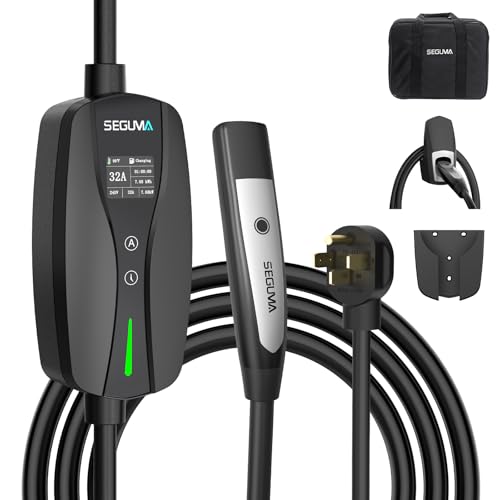
If your goal is to keep one charger that can live at home most of the week and then hop into the frunk or trunk for a getaway, the Seguma makes sense. It is a NACS charger aimed squarely at Tesla drivers and other NACS-compatible vehicles, with adjustable amperage up to 32A, a timing-delay function, and a 23-foot cable. That recipe is practical for condo parking, vacation rentals, family visits, or those weird road-trip nights where you find yourself charging beside an RV hookup under buzzing parking-lot lights.
What I like here is the balance between portability and core functionality. It does not pretend to be an ultra-premium wall unit, and that honesty works in its favor. The display gives useful real-time information, and the included holders and carry bag make the kit feel organized instead of sloppy. For Tesla owners who are tired of slow 120V charging and want a stronger NEMA 14-50 solution without spending premium money, the Seguma hits a solid middle lane.
Pros
- Native NACS connector for Tesla and other NACS vehicles
- Adjustable current and delay charging add flexibility
- Portable kit includes bag and mounting accessories
- Weather-resistant design supports varied charging locations
- Good fit for mixed home-and-travel use
Cons
- 32A output is slower than 40A models
- Less established brand than premium rivals
- Non-NACS vehicles need an adapter
Choose this one if convenience and Tesla compatibility matter more than chasing the absolute fastest plug-in charging rate. It is especially appealing for drivers who want one charger to serve multiple roles without a complicated installation story. If your charger will stay bolted to one wall forever, the EVIQO has a stronger premium feel. For portable Tesla charging with useful features and sane pricing, though, Seguma is easy to like.
To buy this product, click here.
5. Best For Straightforward J1772 Charging: Lectron Level 2 EV Charger

Lectron sits in an interesting space for EV buyers. It is recognizable enough to inspire more confidence than many ultra-cheap listings, but it still aims at people who want a simple plug-in solution rather than a heavily app-driven charging station. This charger offers 40A output, ETL certification, Energy Star certification, a J1772 connector, and a portable design. That formula works well for drivers who want dependable Level 2 charging and do not feel the need to tap through phone menus every time they park.
The main tradeoff is right there in the cable length. At 16 feet, it is shorter than several rivals here, and that can matter a lot in a real driveway. If your outlet is mounted near the front corner of the garage and your charge port sits on the opposite rear quarter panel, a shorter cable can turn a clean setup into a daily little irritation. Still, for buyers with a straightforward layout, the Lectron offers a recognizable brand, useful safety credentials, and strong 40A performance.
Pros
- 40A charging output supports fast home charging
- ETL and Energy Star certifications add confidence
- Simple NEMA 14-50 plug-in setup
- Good compatibility with J1772 EVs and PHEVs
- Portable enough for occasional travel use
Cons
- 16-foot cable is shorter than many competing chargers
- No standout smart app ecosystem
- Tesla owners need an adapter
This one suits drivers who value a familiar EV accessory brand and want a relatively uncomplicated charger for a clean garage layout. Skip it if your parking position varies a lot or if you know you want app controls and long cable reach from the start. If your needs are basic and your vehicle uses J1772, Lectron remains a dependable middle-ground option.
To buy this product, click here.
6. Best App-Based Tesla Pick On A Budget: AIMILER Level 2 Tesla Charger

For buyers who like the idea of app scheduling and charging history but do not want to spend premium money, the AIMILER has a pretty clear lane. It gives Tesla and NACS users a 32A charger with WiFi app support, a 25-foot cable, adjustable amperage, and touch-screen controls. On paper, that is a very appealing set for the price range, especially if you are moving up from slow portable charging and want more control over when your car drinks power.
It also feels tailored to people who enjoy tinkering a little. Think of the owner who checks charging cost in the app while sipping coffee in the kitchen and likes being able to nudge amperage up or down depending on the circuit. That is the AIMILER crowd. The flip side is that budget smart chargers can require a little patience during setup, especially on 2.4 GHz WiFi. If you want a plug-it-in-and-forget-it experience with maximum polish, there are smoother options above. If you want strong feature density for the money, AIMILER lands well.
Pros
- Native NACS connector suits Tesla drivers well
- WiFi app adds scheduling and charging history
- 25-foot cable offers generous reach
- Adjustable amperage improves circuit flexibility
- Good value for a smart Tesla-focused charger
Cons
- 32A max is slower than 40A options
- App setup may require some patience
- Best fit is Tesla or NACS vehicles, not broad J1772 use
This is a solid match for Tesla owners who want features first and brand prestige second. It fits renters, first-time EV owners, and budget-conscious households trying to stretch dollars without dropping back to a bare-bones charger. If you need top-tier support or stronger certification depth, EVIQO feels more robust. If you want a smart Tesla charger that keeps the bill lower, AIMILER has real appeal.
To buy this product, click here.
7. Best Budget Pick: EVDANCE Level 2 EV Charger

Budget EV chargers can be a little scary. A low price is fun until the cable feels flimsy, the controls are vague, or the unit leaves you second-guessing every overnight charge. The EVDANCE earns its spot because it covers the basics well enough to feel like a legitimate budget option instead of a reckless gamble. You get 32A charging, a 25-foot cable, J1772 compatibility, adjustable current settings, delay charging, and a portable form that can move between garage, trunk, and vacation house.
That long cable is a real win at this end of the market. Plenty of drivers discover too late that the cheapest charger with the shortest cord becomes a daily annoyance. EVDANCE avoids that trap. It also includes a carry case and wall-mounting bracket, which helps it pull double duty. Picture a weekday setup mounted in the garage, then Friday afternoon you coil it up and bring it along for a cabin trip where there is a 14-50 outlet near the parking area. That kind of flexibility is exactly why this one works as the budget pick.
Pros
- Affordable entry into NEMA 14-50 Level 2 charging
- 25-foot cable is excellent at this price level
- Adjustable amperage helps match different circuits
- Portable design with carrying case adds convenience
- J1772 plug works with many non-Tesla EVs
Cons
- 32A output trails faster 40A chargers
- Warranty coverage is shorter than some rivals
- Brand reputation is still developing
Buy this if your mission is simple: get reliable Level 2 charging at the lowest reasonable cost without surrendering cable reach and basic convenience features. It is especially easy to recommend for commuters with J1772 vehicles who charge overnight and do not need the maximum possible speed. If you want a better-known brand or richer app features, there are upgrades above. For budget shoppers, though, EVDANCE punches above its class.
To buy this product, click here.
8. Best For Outdoor Outlet Protection: 50 Amp EV Power Outlet Box
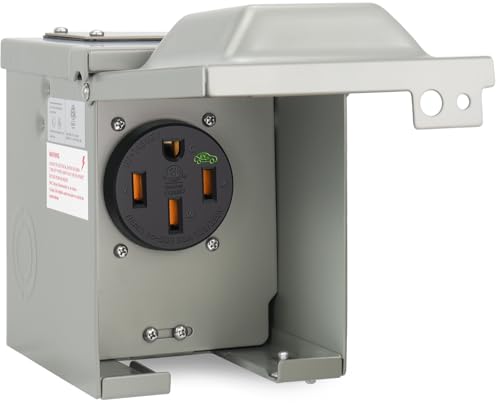
This is the oddball in the lineup, and it deserves a quick explanation. Strictly speaking, it is not an EV charger. It is a weatherproof NEMA 14-50R outlet box. Under normal circumstances I would avoid accessories for a charger roundup, but NEMA 14-50 charging often lives or dies on the quality and protection of the outlet itself, especially for outdoor installations. If your charger setup is on an exterior wall, beside a driveway, or near a shared parking area, a lockable enclosure can be the difference between a clean dependable setup and a headache every time rain rolls in.
Think of the homeowner with an outdoor outlet under a carport, or the driver parking along the side of the house where power theft or accidental unplugging is a real concern. That is where this box makes sense. The heavy-duty enclosure, EV-oriented receptacle, and weather protection can help create a better foundation for the charger you choose. It is still an outlet solution, not a charging unit, so it belongs as a niche pick rather than a main recommendation.
Pros
- Useful for protecting outdoor NEMA 14-50 charging setups
- Lockable design helps deter tampering and power theft
- Weatherproof enclosure suits exposed mounting locations
- Heavy-duty construction is appropriate for repeated EV use
- Can improve the practicality of an outdoor plug-in charger setup
Cons
- It is not a charger by itself
- Requires proper installation knowledge or electrician help
- Only relevant for certain outdoor or exposed installations
Choose this only if your real problem is the outlet environment rather than the charger itself. Homeowners building an outdoor EV charging station may find it genuinely helpful. Most buyers looking for a complete NEMA 14-50 EV charger can skip it and focus on the actual charging units in this guide. It is a niche tool, but in the right scenario, it solves a very real problem.
To buy this product, click here.
9. Best For Long-Term Smart Home Use: ChargePoint HomeFlex for Long-Term Smart Home Use
For buyers building a broader smart-home rhythm around their EV, the ChargePoint HomeFlex deserves another look through that specific lens. The app experience, charging reminders, data access, and wider network familiarity give it an advantage that many cheaper chargers cannot easily match. If your charging habits are part of a bigger pattern, maybe time-of-use utility rates, multiple drivers, calendar-driven commuting, or careful household energy tracking, the HomeFlex feels especially coherent.
There is a difference between a charger that technically works and one that quietly becomes part of your routine. This one leans toward the second category. Imagine the garage door rumbling open after a rainy evening, the cable still flexible in the cold, and a quick glance at the app confirming charging will begin later at the cheaper overnight rate. That kind of low-friction ownership is what this unit does well. It is familiar, polished, and easy to fit into a long-term home charging plan.
Pros
- Excellent app and data features for routine home charging
- Strong support from a widely known charging brand
- Good fit for utility-rate scheduling and energy tracking
- Broad J1772 compatibility for many EV households
- Suitable for a more permanent charging setup
Cons
- Duplicates the same product family as the overall pick
- Less compelling for buyers who do not care about app features
- Tesla owners still need an adapter
If your buying decision is heavily shaped by software quality and long-term ecosystem confidence, the HomeFlex remains a standout. That said, this slot highlights a product family already represented above, and most shoppers should treat the main HomeFlex review as the one that matters most. It is still a strong charger, but if you want more variety across brands and use cases, the other picks may serve you better.
To buy this product, click here.
How To Choose The Right NEMA 14-50 EV Charger
Match The Connector To Your Vehicle First
This sounds obvious, yet it trips people up all the time. J1772 chargers are the standard fit for many non-Tesla EVs, while Tesla and newer NACS-based vehicles are often easier to live with using a native NACS plug. Adapters can work fine, but every extra piece adds a little clutter and another possible pain point. If you are the kind of driver who wants to pull in, plug in, and head inside while the dog barks and groceries thaw in the back seat, a native connector is worth extra attention.
Check The Circuit, Not Just The Plug Shape
A NEMA 14-50 outlet does not automatically mean you should run every charger at maximum output. Plenty of chargers offer adjustable amperage for a reason. A 32A charger can be a smarter fit on some setups, and a 40A unit is best paired with the right dedicated circuit. This is where buyers get a nasty surprise after unboxing. The plug fits, but the breaker arrangement or outlet quality is wrong. If your setup is older, outdoor, or shared with other loads, double-check the electrical side before you buy.
Cable Length Can Make Or Break Daily Use
People love to stare at kilowatts and forget the humble cable. Then the charger arrives, the port is on the “wrong” side of the car, and suddenly every parking job feels like a puzzle. A 25-foot cable is often much friendlier in real garages and driveways than a shorter one. If you have two vehicles, a side-mounted outlet, or a cramped parking angle, longer reach is pure quality-of-life gold.
Decide Whether You Want Portable Or Semi-Permanent Use
Some chargers are happiest hanging on the wall every night. Others are better for road trips, cabin weekends, or swapping between homes. Be honest about your habits. If the charger will travel, portability, a carry bag, and easy storage matter more. If it will stay put, app polish, weatherproofing, holster quality, and a cleaner wall setup rise to the top. The difference shows up fast once daily charging becomes routine.
Smart Features Should Solve A Real Problem
Apps, WiFi, charging history, and off-peak scheduling can be fantastic. They can also be fluff if you never use them. A retiree with one EV and flat electric rates may be perfectly happy with a charger that has a simple onboard display. A commuter on time-of-use utility billing may save real money with a smart charger that schedules overnight sessions automatically. Buy the feature set that matches your routine, not the one with the fanciest bullet points.
Weather Resistance Matters More Outdoors Than Brands Admit
If your charger will live in a covered garage, plenty of units can work well. If it will face cold snaps, damp air, dust, or open-driveway exposure, build quality matters a lot more. Look for clear weather ratings, sturdy cable jackets, and a handle that still feels secure with wet hands or winter gloves. That ugly February morning where everything is stiff and frozen is the moment a better charger proves why it cost more.
Do Not Ignore The Outlet Itself
Some charging complaints start with the charger, but others start with a weak, worn, poorly installed, or poorly protected NEMA 14-50 outlet. That is especially true outdoors. If your receptacle is exposed to weather or tampering, upgrading the enclosure can be as useful as changing the charger. It is boring hardware, sure, but boring hardware often keeps the whole setup from turning into a problem later.
Best NEMA 14-50 EV Charger FAQ
Is a NEMA 14-50 charger always the best choice for home EV charging?
No. It is one of the most popular choices because it balances speed and plug-in convenience well, but it is not automatic perfection for every home. Some drivers are better off with a hardwired charger, especially if they want higher current or a more permanent installation. Others only need occasional charging and can live with slower options. A NEMA 14-50 charger shines when you want fast Level 2 charging from a compatible outlet without fully committing to a hardwired setup.
Can I plug any EV charger into a NEMA 14-50 outlet?
Only if the charger is specifically built with a NEMA 14-50 plug and your electrical setup is appropriate for it. The plug shape has to match, and the circuit needs to support the charger’s power draw. Some chargers also need a dedicated circuit and proper EV-grade receptacle quality. A charger fitting physically into the outlet is only part of the story.
What is the difference between 32A and 40A EV chargers?
A 40A charger can typically deliver more charging power than a 32A unit, which means faster charging if your vehicle can accept it and your circuit supports it. In real life, a 32A charger is often still plenty for overnight charging, especially for commuters who refill daily miles while they sleep. A 40A unit is more attractive for larger batteries, heavier driving, or households that want more turnaround speed.
Do Tesla vehicles need a special NEMA 14-50 charger?
They do not always need a special charger, but they do need the right connector. A Tesla or NACS-native charger is the easiest path. A J1772 charger can still work with an adapter. Many Tesla owners are happy with either setup, though a native NACS connector usually feels cleaner and more convenient in daily use.
Are portable NEMA 14-50 chargers good enough for full-time home use?
Many are, as long as they are properly rated, well built, and used on a suitable outlet. Plenty of drivers use portable Level 2 chargers as their main home charger every day. The biggest differences compared with wall-focused units are usually cable management, app polish, and overall finish. If you value flexibility and travel use, a portable charger can be a smart full-time solution.
How long should the charging cable be?
For most garages and driveways, around 23 to 25 feet is a very comfortable range. That length gives you more freedom with parking position and outlet location. Shorter cables can still work well in tidy single-car garages where the outlet is perfectly placed, but they are less forgiving once real life gets messy.
Should I buy a charger with an app?
Buy one if the app helps with your actual routine. Useful app features include delayed charging for off-peak rates, charging history, cost tracking, and remote control. If you have flat electricity pricing and prefer simple hardware, an onboard screen and manual controls may be all you need. The best app is the one you will actually use after the first week.
Can I install a NEMA 14-50 outlet outdoors for EV charging?
Yes, but the details matter. The outlet should be installed correctly for outdoor use, protected from the elements, and paired with appropriate hardware such as a weatherproof enclosure if needed. The charger itself also needs suitable weather resistance. Outdoor charging can work very well, but it should feel secure, sealed, and built for repeated use.
Final Verdict
If I were narrowing this list to one recommendation for most people, the ChargePoint HomeFlex still comes out on top. It has the strongest all-around blend of brand trust, smart features, compatibility for mainstream J1772 EVs, and the kind of everyday polish that makes ownership feel smooth after the novelty of purchase wears off. If you want to save money while still getting a very usable setup, the EVDANCE Level 2 EV Charger is the budget pick that makes the most sense. If you want a Tesla-focused upgrade with stronger premium credentials, the EVIQO NACS Charger is the one I would look at first.
The right charger, though, is the one that fits your car and your space. A crooked driveway, a side-mounted outlet, winter weather, time-of-use utility billing, or a Tesla charge port can change the best answer fast. Focus on connector type first, then charging output, then cable length, then whether smart features will genuinely improve your routine. Get those pieces right, and your NEMA 14-50 setup stops feeling like a gadget purchase and starts feeling like one of the most satisfying upgrades you can make to daily EV life.