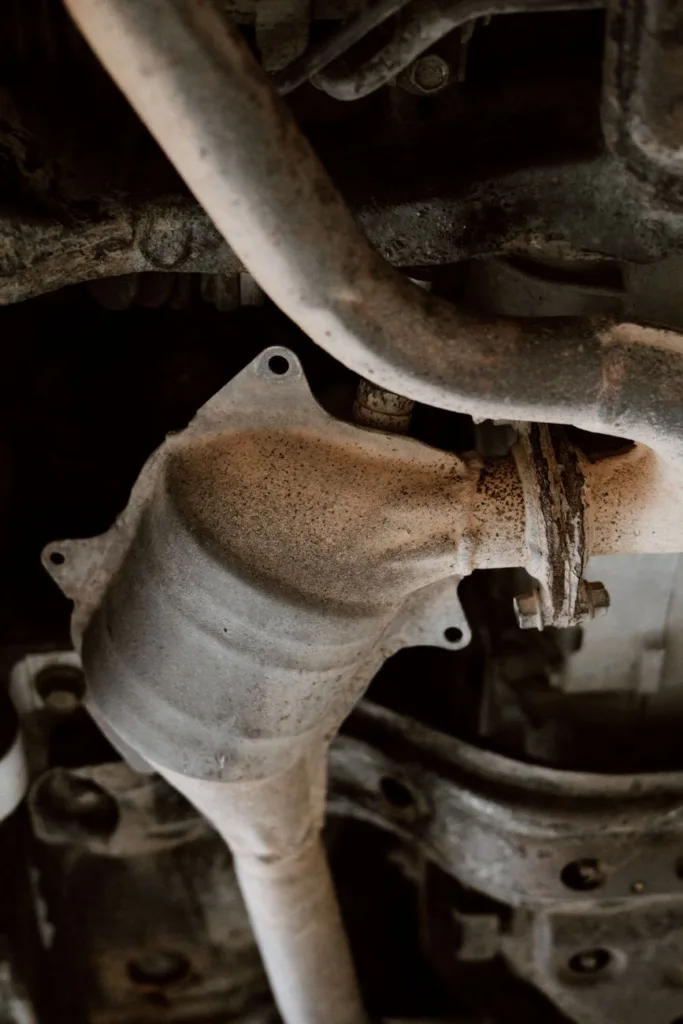
You should not inspect your catalytic converter on a fixed monthly schedule like an oil change, but you should pay attention to it during routine vehicle service and anytime warning signs appear. For most drivers, a basic inspection during regular maintenance visits, annual inspections where required, or whenever the check engine light comes on is enough. If your vehicle is older, has high mileage, burns oil, misfires, or has exhaust issues, it deserves closer attention.
For collecting relevant fault codes and live data, our diagnostic scanners for home mechanics guide compares tool options; verify vehicle and module coverage, and confirm the cause with the appropriate tests.
The catalytic converter is part of your exhaust and emissions system. It helps reduce harmful pollutants before they leave the tailpipe. Unlike tires, brakes, or fluids, it is not usually a part that needs frequent scheduled replacement. Still, it can fail, clog, overheat, crack, or be damaged by engine problems, road debris, or theft attempts. That is why knowing when to inspect it matters more than following a simple one-size-fits-all interval.
This guide explains how often to inspect a catalytic converter, what signs to watch for, what happens during an inspection, and when you should get a professional diagnosis.
How Often Should You Inspect a Catalytic Converter?
For most vehicles, a catalytic converter should be visually checked during routine maintenance and inspected more carefully whenever symptoms appear. A practical schedule looks like this:
| Situation | Recommended Inspection Timing | Why It Matters |
|---|---|---|
| Normal driving, no symptoms | During regular service visits or at least once a year | Helps spot rust, impact damage, leaks, or tampering |
| Check engine light comes on | Immediately or as soon as practical | Converter issues often trigger emissions-related trouble codes |
| Engine misfire, oil burning, rich fuel mixture | Prompt inspection | These problems can quickly damage the converter |
| Rattling exhaust noise | As soon as possible | May indicate broken converter substrate or heat shield issues |
| Loss of power or rotten egg smell | Prompt inspection | Can point to restriction or internal failure |
| After hitting road debris or a curb | Inspect soon after impact | The converter housing can dent, crack, or shift |
| High-mileage or older vehicle | At every major service | Age, rust, and long-term heat cycles increase risk of failure |
If you want a simple rule, this is a good one: inspect the catalytic converter at least yearly, and sooner if your vehicle shows symptoms or develops engine problems.
Why Catalytic Converters Usually Do Not Have a Strict Replacement Interval
Many maintenance items have a defined service life. Spark plugs, engine oil, filters, and coolant usually have manufacturer intervals. Catalytic converters are different because they are designed to last a long time and often remain in service well past 100,000 miles.
That said, long life does not mean guaranteed life. A converter can fail early if the engine is running poorly. Unburned fuel from a misfire can overheat the converter. Burning oil or coolant can contaminate it. Physical damage from speed bumps, off-road use, or corrosion can also shorten its life.
In other words, the converter often lasts a long time if the engine and exhaust system stay healthy. That is why inspection is usually based on condition and symptoms rather than a mileage-only schedule.
What a Catalytic Converter Inspection Actually Involves
When people hear the word inspection, they sometimes imagine taking the converter apart. That is not how it works. Most inspections begin with simple, non-invasive checks. When an emissions or mixture fault is involved, compare the signs of a bad oxygen sensor as part of a broader diagnosis.
Visual inspection
A visual inspection looks for external signs of damage. This may include dents, cracked welds, rust holes nearby, missing heat shields, signs of tampering, or impact damage on the converter body.
On some vehicles, access is easy from underneath. On others, shields and underbody panels make it harder to see. A shop with a lift can check much more thoroughly than someone lying on the driveway.
Check for exhaust leaks
Leaks near the converter or oxygen sensors can affect emissions readings and trigger diagnostic trouble codes. A technician may look for soot marks, listen for unusual noise, or use smoke-testing methods to locate leaks.
Scan for trouble codes
The check engine light is one of the most common clues. Trouble codes such as catalyst efficiency codes can point toward converter-related issues, although the converter is not always the root cause. Oxygen sensor problems, exhaust leaks, or engine performance issues can sometimes mimic converter failure.
Performance symptoms
If the converter is clogged, the vehicle may feel sluggish, struggle to accelerate, or lose power at higher speeds. A technician may use temperature readings, backpressure testing, or scan data to confirm whether the converter is restricted.
Listen for rattling
A broken internal substrate can rattle inside the converter housing. Not every rattle means the converter itself is bad, since heat shields can also loosen, but the sound should still be investigated.
Signs You Should Inspect the Catalytic Converter Sooner
You do not need to wait for an annual service if your vehicle is already showing warning signs. These symptoms justify a sooner inspection: If symptoms suggest an exhaust restriction, review the risks of driving with a bad catalytic converter.
- Check engine light, especially with emissions-related codes
- Rotten egg or sulfur smell from the exhaust
- Loss of engine power, especially under load
- Poor fuel economy that appears alongside other symptoms
- Rattling under the vehicle
- Failed emissions test
- Excessive exhaust heat under the car
- Engine misfires or rough running
- Visible exhaust damage after road impact
Some symptoms are subtle at first. For example, a slightly clogged converter may only show up as weak highway acceleration or poor throttle response. Drivers sometimes blame the transmission or fuel system before the exhaust is checked.
How Driving Conditions Affect Inspection Frequency
Not all vehicles live the same life. A catalytic converter on a lightly used commuter car may need far less attention than one on a high-mileage work vehicle.
Short-trip driving
Frequent short trips are hard on the entire exhaust system. Moisture does not always burn off fully, and the engine may not reach ideal operating conditions often enough. While short trips do not automatically ruin a converter, they can contribute to exhaust corrosion and ongoing engine issues that affect converter health.
High-mileage commuting
A vehicle that racks up highway miles may actually be easier on the exhaust in some ways, since steady operating temperature is beneficial. Still, the converter sees many heat cycles over time, so age and mileage eventually matter.
Severe-duty use
Towing, delivery driving, stop-and-go operation, and high-idle fleets can put extra heat stress on the exhaust system. If the engine also runs rich or experiences misfires, the converter may age faster.
Oil-burning or high-mileage engines
If your engine consumes oil, the converter should be watched more closely. Burning oil can contaminate the catalyst material and reduce efficiency. The same concern applies if coolant is leaking into the combustion chamber.
Rough roads or off-road use
Ground clearance matters. Vehicles exposed to rough roads, deep ruts, curbs, or debris have a higher risk of physical exhaust damage. In these cases, inspect after any notable impact.
When to Inspect a Catalytic Converter Based on Vehicle Age and Mileage
There is no universal mileage number where every converter must be checked, but age and mileage can guide how cautious you should be.
| Vehicle Condition | Suggested Approach | What to Watch For |
|---|---|---|
| Under 5 years old, no issues | Check during routine service | Damage, leaks, warning lights |
| 5 to 10 years old | Yearly inspection is wise | Corrosion, heat shield rust, sensor issues |
| Over 10 years old | Inspect at major service intervals and when symptoms appear | Rust, cracks, clogging, theft damage |
| Over 100,000 miles | Pay closer attention even without a set replacement schedule | Efficiency decline, rattling, performance changes |
| High-mileage engine with misfire or oil use | Inspect promptly and address engine problem first | Overheating, contamination, recurring codes |
The converter may still be fine at high mileage. The point is not that mileage alone condemns it, but that the chance of age-related or engine-related problems becomes higher.
What Can Damage a Catalytic Converter Between Inspections?
Understanding what causes converter failure helps you know when an early inspection is smart.
Engine misfires
This is one of the biggest risks. A misfiring cylinder sends unburned fuel into the exhaust. The converter then has to process fuel it was never meant to handle in that quantity, which can create extreme heat and melt the internal substrate.
Running rich
If the engine gets too much fuel and not enough air, the converter works harder and can overheat. Faulty sensors, injector problems, and engine management issues can all contribute.
Oil or coolant contamination
Burning oil or coolant can coat the catalyst material and reduce its ability to do its job. This may not cause an immediate blockage, but it can trigger efficiency problems over time.
Physical impacts
Hitting debris, curbs, rocks, or road hazards can dent or crack the converter housing. Even if the outside damage looks minor, the internal structure may be broken.
Corrosion and rust
In wet, snowy, or salted-road environments, the surrounding exhaust pipes and flanges often rust first. If leaks develop near the converter, the entire system may need attention.
Theft attempts
Even a failed theft attempt can damage pipes, wiring, oxygen sensors, or mounting points. If you notice fresh cuts, missing shields, or sudden exhaust noise, inspect the system immediately.
Can You Inspect a Catalytic Converter Yourself?
You can perform a limited basic inspection yourself if you can safely access the underside of the vehicle. However, diagnosing converter health accurately often requires more than a flashlight.
What a DIY check can include
- Looking for visible dents, rust, or scraping damage
- Checking for hanging exhaust parts or loose heat shields
- Listening for rattles when the exhaust is tapped lightly and safely when cool
- Watching for check engine light activity
- Noting sulfur smells, power loss, or unusual exhaust sounds
What usually requires a professional
- Reading and interpreting diagnostic trouble codes accurately
- Backpressure testing
- Temperature comparison testing
- Distinguishing converter failure from oxygen sensor problems
- Checking for internal melting or clogging
Never touch the exhaust when it is hot. Catalytic converters get extremely hot during operation and can stay hot long after the engine is turned off.
How Mechanics Diagnose Catalytic Converter Problems
A professional diagnosis matters because many converter-related symptoms overlap with other problems. Replacing a converter without fixing the real cause can lead to another failure.
Code scanning and live data
A technician may check stored codes and compare oxygen sensor readings before and after the converter. This helps determine whether the converter is operating efficiently or whether a sensor issue is misleading the system.
Backpressure testing
If clogging is suspected, an exhaust backpressure test can help confirm restriction. A clogged converter can choke engine performance, especially at higher RPM.
Temperature testing
Technicians may compare inlet and outlet temperatures under specific conditions. This can provide clues about converter function, though it is usually just one part of a larger diagnosis.
Physical inspection on a lift
A lift makes it easier to see impact damage, cracks, rust, and poor-quality previous repairs. This is especially useful on older vehicles where exhaust components may be deteriorated in several places.
Common Mistakes Vehicle Owners Make
Converter problems often get worse because the real issue is ignored too long. These are some of the most common mistakes.
Ignoring a flashing or steady check engine light
If the light is related to a misfire or emissions fault, waiting can turn a minor repair into a major exhaust repair. A catalytic converter can be damaged by ongoing engine problems that were relatively inexpensive to fix early.
Replacing the converter without fixing the cause
If the engine is burning oil, misfiring, or running rich, the new converter may fail too. The converter is often the victim, not the original cause.
Assuming every rattle is internal converter failure
Loose heat shields are common, especially on older vehicles. They can sound alarming but may be less serious than a broken substrate. The noise still needs inspection, but it should not be guessed at.
Waiting for total blockage
Some drivers keep going until the vehicle can barely accelerate. By then, the converter may be severely clogged and the engine may have been under unnecessary stress.
Overlooking impact damage
After scraping the underside on a curb or road debris, some owners check only the tires or bumper. The exhaust may have taken a hit too.
Maintenance Tips That Help Protect a Catalytic Converter
You usually do not maintain the converter directly. Instead, you protect it by keeping the engine and exhaust system in good condition.
- Fix misfires quickly. This is one of the most important steps you can take.
- Do not ignore oil consumption. Excess oil burning can damage the catalyst over time.
- Address coolant leaks promptly. Internal coolant burning is harmful to the converter.
- Keep up with tune-ups. Spark plugs, ignition coils, and air-fuel control issues matter.
- Repair exhaust leaks. Leaks can affect sensor readings and overall system performance.
- Drive carefully over road hazards. The converter is mounted under the vehicle and can be struck.
- Investigate sulfur smells or power loss early. Small symptoms can point to growing restriction or inefficiency.
Typical Inspection and Repair Cost Considerations
Inspection costs vary depending on what is being checked. A simple visual check during routine service may add little or nothing if the vehicle is already on a lift. A more detailed diagnostic visit with code scanning and exhaust testing can cost more, depending on labor rates and the time needed.
| Service Type | What It Usually Includes | Typical Cost Range |
|---|---|---|
| Basic visual exhaust inspection | Check for damage, rust, leaks, loose shields | Often included with service or roughly $20 to $80 |
| Diagnostic scan | Read codes, basic system review | Roughly $50 to $150 |
| Advanced diagnosis | Backpressure, live data, deeper testing | Roughly $100 to $250 or more |
| Converter replacement | Part and labor | Can range widely from several hundred dollars to well over $2,000 depending on vehicle |
These are broad estimates only. Vehicle type, converter location, local labor rates, emissions requirements, and parts quality standards all affect cost.
When You Should See a Mechanic Right Away
Some situations deserve quicker action rather than waiting for your next oil change.
- Check engine light is flashing
- The vehicle is misfiring
- Power loss is severe or worsening
- You smell strong sulfur from the exhaust
- You recently hit road debris and now hear exhaust noise
- The underside rattles loudly
- You failed an emissions inspection
A flashing check engine light often points to an active misfire that can damage the converter quickly. In that situation, driving less and diagnosing sooner is the smart move.
Simple Inspection Schedule for Most Drivers
If you want a practical maintenance rule that is easy to remember, use this:
- Have the catalytic converter visually checked during routine service visits.
- Make sure it is looked at at least once a year, especially on older vehicles.
- Inspect it immediately if the check engine light appears or if you notice smells, rattles, or power loss.
- Inspect it after any underside impact or attempted theft.
- If the engine misfires, burns oil, or runs poorly, prioritize diagnosis because those issues can damage the converter.
That schedule fits most drivers better than a strict mileage-only interval.
Frequently Asked Questions
How often should a catalytic converter be checked?
For most vehicles, it should be checked during regular maintenance visits and at least once a year. It should also be inspected anytime warning signs appear.
Do catalytic converters require regular maintenance?
Not direct maintenance in the usual sense. They are mostly protected by maintaining the engine properly and fixing problems like misfires, oil burning, and exhaust leaks quickly.
Can a catalytic converter fail without warning?
Yes, but many failures are preceded by symptoms such as a check engine light, rattling, sulfur smell, poor performance, or failed emissions testing.
Should I inspect the catalytic converter after hitting something on the road?
Yes. Road debris, curbs, and rough impacts can dent or crack the converter or nearby exhaust parts.
Will a bad oxygen sensor feel like a bad catalytic converter?
Sometimes. Sensor issues and converter issues can trigger similar trouble codes or drivability symptoms. Proper diagnosis is important before replacing anything.
How long does a catalytic converter usually last?
Many last well over 100,000 miles, and some last much longer. Actual lifespan depends heavily on engine condition, driving environment, and whether the exhaust system has suffered damage.
Can I drive with a bad catalytic converter?
Sometimes the vehicle will still drive, but it depends on the problem. A clogged converter can cause severe power loss, and ongoing engine issues can quickly worsen the damage. Diagnosis should not be delayed.
Does a failed emissions test mean the catalytic converter is bad?
Not always. Engine tuning issues, oxygen sensor faults, vacuum leaks, and exhaust leaks can also cause emissions failure. The converter is only one possible cause.
Final Takeaway
The best answer to how often you should inspect a catalytic converter is during routine service, at least yearly, and immediately when symptoms appear. There is usually no strict manufacturer replacement interval, but that does not mean the converter should be ignored.
If your vehicle is older, high-mileage, misfiring, burning oil, or showing signs like rattling, sulfur smell, or power loss, inspect it sooner rather than later. Most importantly, remember that converter failure is often caused by another engine or exhaust issue. Catching that root problem early is the best way to protect the converter and avoid a larger repair bill.