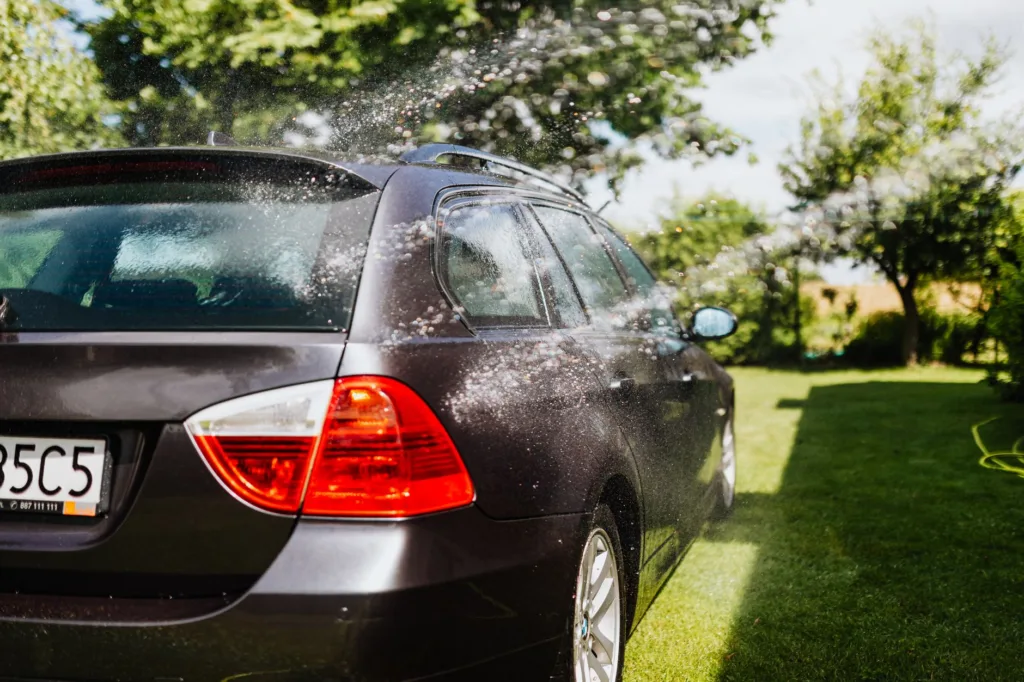
Yes, you can wash a car in direct sunlight, but it is usually harder to do well. Strong sun speeds up evaporation, which can leave water spots, streaking, soap residue, and uneven drying before you have time to rinse or wipe everything properly. That does not mean it is impossible, but it does mean you need to work faster, use better technique, and pay close attention to the surface temperature of the paint.
For the cleaning step, our car wash soap comparison covers purpose-made wash products to use alongside the method discussed here.
The biggest issue is not the sunlight itself. It is the heat the sun puts into the body panels, glass, and trim. When those surfaces get hot, shampoo and rinse water dry too quickly, and minerals in the water can bond to the paint. If you are careful, you can still get a clean result. If you rush or use the wrong method, you are more likely to leave spots behind or create extra work later.
What Happens When You Wash a Car in Direct Sunlight?
When sunlight hits a car, it warms the paint, glass, plastic trim, and metal panels. Dark colors heat up faster than light colors, and horizontal panels such as the hood, roof, and trunk usually get the hottest. As the surface temperature rises, water droplets evaporate more quickly. That is where most of the problems begin.
Water spots form when water dries and leaves behind dissolved minerals. If your water supply has a high mineral content, those spots can show up quickly, especially on hot paint. Soap residue can also dry too fast, making it harder to rinse away cleanly. Even drying towels can drag or streak if the surface is already warm.
There is also a comfort and safety issue. Working around a hot car in strong sun is tiring, and hoses, buckets, and panels can become uncomfortably hot to handle. On very hot days, it is easy to overlook areas that need attention because you are trying to keep up with the drying.
Is It Bad to Wash a Car in Direct Sunlight?
It is not automatically bad, but it is usually not ideal. The results depend on the weather, water quality, the color of the vehicle, and how quickly you work. A cloudy but warm day is much easier to manage than a bright afternoon with high heat and wind.
For routine cleaning, washing in the shade is still the better choice. Shade slows evaporation and gives you more time to rinse and dry the car properly. But if shade is not available, direct sunlight can still be workable if you adjust your process.
Here is the practical takeaway: sunlight does not damage the car just because you wash it in it. The risk comes from heat and rapid drying, which make spotting, streaking, and soap residue more likely.
Direct Sunlight vs Shade: What Changes?
| Factor | Direct Sunlight | Shade |
|---|---|---|
| Drying speed | Very fast | Slower and easier to control |
| Water spot risk | Higher | Lower |
| Soap residue risk | Higher if you pause too long | Lower |
| Ease of rinsing | More difficult on hot panels | More forgiving |
| Comfort for the person washing | Hotter and more tiring | More comfortable |
| Finish quality | More dependent on technique | Easier to achieve a clean, spot-free result |
The table makes the main point clear. In direct sunlight, you are fighting time. In shade, you have more time to rinse, dry, and correct mistakes before they become visible.
When Is It Most Risky to Wash in the Sun?
Some conditions make sunlight washing much more difficult. A hot car on a summer afternoon is the most obvious example, but there are several other situations where the risk of spotting rises quickly.
Hot Weather and Dark Paint
Dark-colored vehicles absorb more heat. Black, navy, dark gray, and deep red paint can become hot enough to flash-dry rinse water almost immediately. On those vehicles, even a short pause can leave a patchy finish.
Windy Conditions
Wind speeds up evaporation. Even if the air temperature is moderate, a breezy day can make a wash feel like a race. Water and soap film disappear faster, especially from panels exposed to the wind.
Hard Water
Hard water contains more dissolved minerals, which means any droplets that dry on the paint are more likely to leave visible spots. If your local tap water is hard, sunlight washing becomes even more challenging.
Black Plastic and Trim
Plastic trim and textured surfaces can show drying streaks quickly. Hot black trim is especially prone to water marks and soap residue if you do not rinse it thoroughly.
Can Direct Sunlight Damage the Paint?
Sunlight itself does not usually damage paint during a normal wash. Modern automotive paint is designed to handle outdoor exposure. The real concern is indirect damage from improper washing technique, such as letting soapy water dry on the surface or scrubbing a hot panel with a dry towel.
If a car has weak clear coat, neglected paint, or existing contamination, hot sun can make imperfections more noticeable. It may also make it easier to create faint streaks that are hard to see until the panel cools down.
In other words, the sunlight is not the main threat. Heat, time pressure, and residue are what make the wash process harder.
How to Wash a Car in Direct Sunlight More Successfully
If you have no choice but to wash in the sun, the goal is to reduce how long water and soap stay on the paint. That means working one section at a time, rinsing often, and drying quickly but carefully.
1. Wash Early or Late if Possible
The easiest way to avoid problems is to wash when the sun is lower and the panels are cooler. Early morning and late afternoon are usually better than mid-day. Even if the car is still outside, lower sun intensity gives you a little more time to work.
2. Start with a Cool Surface
If the car has been sitting in direct sun, let it cool down before washing. You can do this by moving it into shade, waiting for temperatures to drop, or rinsing the hottest panels first. Never assume the surface is safe to wash just because the air feels comfortable.
3. Rinse the Entire Vehicle First
A thorough rinse helps remove loose dirt before washing. It also cools the panels slightly, which can buy you a small amount of extra working time. Focus on removing dust, pollen, and road grit before touching the paint with a wash mitt.
4. Work One Section at a Time
Do not soap the entire car at once in bright sun. Wash one panel or one small section, then rinse it immediately. That keeps soap from drying on the surface before you can remove it.
5. Keep the Car Wet While You Work
If a section starts to dry before you rinse it, mist it with water again. That is better than letting soap or grime bake onto a hot surface. The wash process may take longer, but it reduces spotting and streaking.
6. Dry Immediately and Carefully
After rinsing, dry the panel right away with a clean microfiber drying towel or another safe drying method. Do not let standing water evaporate on its own if you can avoid it. The sooner you remove the water, the less chance minerals have to leave marks.
7. Pay Extra Attention to Glass and Trim
Windows, mirrors, and black trim often show drying marks first. Wipe them sooner rather than later, and check them in different light angles before you finish.
Useful Techniques for Hot, Sunny Washes
Some methods are better suited to bright conditions than others. The goal is not just cleanliness. It is also control over drying. To reduce rapid drying on hot panels, consider the best time of day to wash a car.
Two-Bucket Washing Helps, but It Does Not Solve Drying
The two-bucket method helps reduce dirt being dragged back onto the paint, which is useful in any condition. However, it does not prevent water spots. In direct sunlight, you still need to manage rinse and drying time carefully.
Rinseless Washing Can Be More Practical
In some cases, a rinseless wash is easier than a full traditional wash in direct sun, especially if the car is only lightly dirty. Because you use less water, there is less standing water to evaporate. That said, rinseless washing still requires proper technique and is not ideal for heavily soiled vehicles.
Foam Cannons Do Not Eliminate Heat Problems
Foam can help loosen dirt, but it will still dry too quickly on a hot panel if you leave it too long. Foam is useful, but it is not a solution to direct sun and high heat by itself.
Spot-Free Rinse Water Helps, but It Is Not Required
Some owners use filtered or deionized water for the final rinse to reduce spotting. That can help in hard-water areas, but it is not the only way to get good results. Careful drying is still important.
Common Mistakes When Washing in Direct Sunlight
Many of the problems people blame on the soap or towel are actually caused by process mistakes. These are the most common ones.
- Washing the whole car before rinsing any section, which gives soap time to dry.
- Using too much soap, which increases residue if you cannot rinse fast enough.
- Letting water sit on hot panels, especially on the hood, roof, and trunk.
- Drying too slowly, which allows hard-water spots to form.
- Using dirty towels or mitts, which can scratch paint more easily on dry, hot surfaces.
- Ignoring the glass and trim, where streaks often show up first.
- Starting at midday on a hot day, when the surface temperature is already high.
What Parts of the Car Are Hardest to Wash in the Sun?
Not every part of the car behaves the same in sunlight. Some panels are more forgiving, while others dry almost immediately.
| Area | Why It Is Difficult | Practical Tip |
|---|---|---|
| Hood | Often gets direct sun and heats quickly | Wash and dry it early |
| Roof | Large horizontal surface traps heat | Rinse in smaller sections |
| Trunk lid | Also a horizontal heat-retaining panel | Do not let water sit on edges and seams |
| Windows | Show spots and streaks easily | Dry promptly and inspect at an angle |
| Black plastic trim | Shows residue and drying marks | Wipe carefully before product dries |
Does the Type of Soap Matter?
Yes, but not as much as technique. A quality car wash shampoo is formulated to clean paint without stripping protection too aggressively or leaving excessive residue. That said, even a good shampoo can dry badly if the panel is too hot.
Thicker or more concentrated soap is not always better in sunlight. If the solution is too heavy, it can leave film behind when it dries. A balanced shampoo mixed according to label directions is usually the safest choice.
Avoid household detergents meant for dishes or general cleaning. They can be harsher on paint protection and trim, and they are not designed for automotive finishes.
Will Washing in the Sun Remove Wax or Sealant Faster?
Normal washing in sunlight does not usually strip wax or sealant by itself. However, repeated harsh washing, strong cleaners, and abrasive drying habits can reduce protection over time. If the sun forces you to work faster and you end up rubbing harder to remove spots, that can shorten the life of the finish on the surface.
If your vehicle has a waxed or sealed finish, that protection may help water bead and shed a little more quickly. Still, it does not eliminate spotting if droplets are left to dry on hot paint.
When Should You Avoid Washing in Direct Sunlight?
There are times when washing in direct sun is more trouble than it is worth. If the temperature is very high, the vehicle is dark-colored, the water is hard, and you do not have a quick-drying method, waiting for better conditions is usually the smarter choice.
You should also avoid washing on very hot panels if you can. A blazing hood or roof can make soap dry almost immediately. In those conditions, even experienced owners can end up with streaks and mineral spots.
If you are preparing a car for a show, sale, or detailed inspection, shade is strongly preferable. Small defects are easier to spot and correct when the paint is cool.
How to Fix Water Spots After Washing in the Sun
If spots appear after the wash, do not panic. Light mineral spotting can often be removed with a proper detail spray, diluted vinegar solution appropriate for automotive use, or a dedicated water spot remover, depending on the severity and the surface. Heavier spots may require more careful polishing. If spots remain after drying, compare hard water versus soft water for washing before blaming the towel or soap alone.
The important point is to identify the type of spot before scrubbing. If the residue is only on the surface, gentle cleaning may remove it. If minerals have etched into the clear coat, aggressive rubbing can make the problem worse.
If you are unsure, test a small hidden area first. That is especially important on delicate trim, tinted surfaces, or older paint.
Practical Tips for Better Results in Bright Conditions
- Wash when the panels are cool, not when the car has been baking all afternoon.
- Use plenty of rinse water before touching the paint.
- Never let soap sit on a hot panel for long.
- Dry section by section instead of waiting until the whole car is rinsed.
- Keep extra microfiber towels ready so you can switch to a dry one if needed.
- Check for spots in angled light before finishing.
- Focus on speed without rushing into sloppy technique.
Typical Cost Considerations
The cost difference between washing in the sun and washing in the shade is usually not about money, but about time and effort. If sunlight causes spotting, you may spend extra time re-rinsing, re-drying, or correcting residue later. That can make a simple wash take much longer.
If you choose to use filtered rinse water, extra drying towels, or specialty spot-removal steps, there may be some added cost. However, for most owners, the main investment is in careful technique rather than expensive gear.
FAQ
Can you wash a car in direct sunlight?
Yes, but it is easier to get water spots and streaks because the surface dries faster. Shade is better, but sunlight washing can still work if you move quickly and dry the car promptly.
Does direct sunlight damage car paint while washing?
Not usually by itself. The bigger issue is heat, which causes soap and water to dry too fast and leave residue or mineral spots.
What is the best time of day to wash a car?
Early morning or late afternoon is usually best because the panels are cooler and the sun is less intense. That gives you more time to rinse and dry properly.
Can I wash a black car in direct sun?
Yes, but black paint heats up faster and shows spots more easily. You need to work especially quickly and avoid letting water sit on the surface.
Why does my car get spots after I wash it in the sun?
The water is evaporating before you dry it, leaving behind minerals from the water. Hard water and hot panels make this more likely.
Is rinseless washing better in direct sunlight?
It can be, especially for lightly dirty vehicles, because it uses less water and reduces the chance of evaporation spots. It still requires proper technique and is not ideal for heavy dirt.
Should I let the car dry naturally in the sun?
It is better not to. Natural drying increases the chance of water spots, especially on hard-water surfaces and hot panels. Drying by hand is usually safer for the finish.
Conclusion
You can wash a car in direct sunlight, but it is rarely the easiest or cleanest option. The main problem is fast evaporation, which leads to water spots, soap residue, and streaking before you can finish rinsing and drying.
If you must wash in the sun, the best approach is to work on a cool surface, rinse one section at a time, and dry immediately. Early morning or late afternoon is usually more forgiving than mid-day, and shade is still the better choice whenever it is available.
In short, sunlight does not make car washing impossible. It just makes careful timing, quick drying, and good technique much more important.