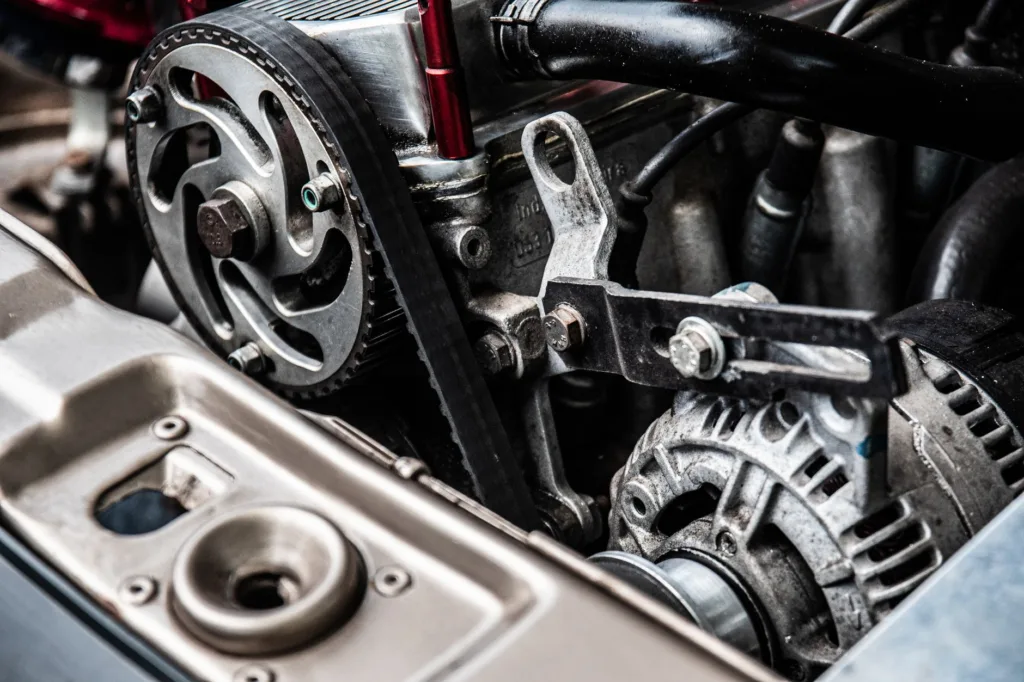
You can drive with a bad alternator for a short time in some cases, but it is usually a temporary and risky situation, not something to rely on. Once the alternator stops charging properly, your vehicle begins running mostly on battery power. When that battery voltage drops too far, the engine can stall, electronics can shut off, and safety systems may stop working as expected.
To investigate charging-system trouble before replacing parts, our alternator tester comparison covers equipment options to use alongside battery, belt, and connection checks.
In practical terms, a failing alternator might let you drive a few miles, or it might leave you stranded very quickly. The outcome depends on battery condition, electrical load, weather, and how badly the alternator has failed. If you suspect alternator trouble, the safest move is to limit driving, turn off unnecessary electrical accessories, and have the charging system tested as soon as possible.
This matters because alternator problems often start with small warning signs, then suddenly become much more serious. A car that starts and drives normally in the morning can become a no-start or stall later the same day if the charging system is no longer keeping up.
What the Alternator Does
The alternator is a key part of your vehicle’s charging system. Its job is to generate electricity while the engine is running. That electricity powers the vehicle’s electrical systems and recharges the battery after starting.
Many drivers assume the battery alone powers the car while driving, but that is not how most gasoline and diesel vehicles work. The battery mainly provides the burst of power needed to start the engine. After that, the alternator takes over and supplies power to things like the ignition system, fuel system, lights, climate controls, infotainment, and charging ports.
If the alternator is weak or failing, the battery starts making up the difference. That works only until the battery’s stored charge runs low.
Alternator vs Battery
| Component | Main Job | What Happens If It Fails |
|---|---|---|
| Battery | Provides power to start the engine and stabilizes voltage | Vehicle may not start, or may click when turning the key |
| Alternator | Charges the battery and powers electrical systems while driving | Battery drains while driving, warning lights appear, vehicle may stall |
| Serpentine belt | Drives the alternator and often other accessories | Alternator may stop charging entirely, possible overheating on some vehicles |
Can You Drive With a Bad Alternator?
The honest answer is only briefly, and only if absolutely necessary. If the alternator is failing but not completely dead, you may still be able to drive a short distance. If it has failed completely, the car is living on borrowed time.
That is why alternator problems can be deceptive. The engine may still run for a while, especially if the battery is fully charged. But every minute you drive without proper charging reduces the remaining battery reserve.
If your destination is a nearby repair shop or your home, a short trip might be possible. If you are considering a long commute, highway trip, night driving, or heavy traffic with lots of electrical demand, it is a much worse idea.
When It Might Still Move
- The battery is fully charged and in good condition.
- The alternator is weak, not completely dead.
- You are driving in daylight with minimal accessory use.
- The distance is very short.
- The car does not have unusually high electrical demand at that moment.
When It May Stop Very Quickly
- The battery is already weak or old.
- The alternator has completely stopped charging.
- You are using headlights, wipers, defroster, heated seats, or A/C blower.
- The vehicle has many active electronics.
- You are idling in traffic or making repeated stops.
How Long Can You Drive With a Bad Alternator?
There is no reliable mileage estimate that applies to every vehicle. Some cars may continue for only a few minutes. Others may go several miles or longer if the battery is strong and electrical demand is low. The problem is that you usually do not know exactly how much reserve you have left.
Modern vehicles are especially unpredictable because they rely heavily on electronics. Engine management systems, electric fuel pumps, ignition coils, sensors, power steering systems on some models, and transmission controls all need stable voltage. Once system voltage drops too far, drivability problems can start quickly.
It helps to think of a failing alternator as a countdown, not a steady condition. The car is not simply “running badly.” It is slowly losing the electrical support it needs to keep operating.
Factors That Affect How Far You Can Drive
| Factor | Effect on Drivability |
|---|---|
| Battery condition | A newer, fully charged battery may buy you more time |
| Severity of alternator failure | A weak alternator may extend operation more than a fully failed one |
| Electrical load | Headlights, blower motor, defroster, and seat heaters drain power faster |
| Driving conditions | Stop-and-go traffic and idling can make the situation worse |
| Vehicle design | Some vehicles are more sensitive to low voltage than others |
| Weather | Cold weather can reduce battery performance and increase accessory use |
What Happens If You Keep Driving?
If you continue driving with a bad alternator, the most likely outcome is a discharged battery and a stalled or non-starting vehicle. Before that happens, you may notice growing electrical problems.
At first, symptoms can be minor. Then they often stack up quickly. Lights may dim, dashboard warnings may appear, power windows may slow down, or the radio may shut off. Eventually the engine control systems may not get enough voltage to keep the engine running normally.
Common Symptoms While Driving
- Battery warning light or charging system warning on the dash
- Headlights that dim or flicker
- Interior lights that pulse brighter and dimmer
- Slow or erratic power windows
- Weak blower motor performance
- Radio or infotainment glitches
- Warning messages for multiple systems at once
- Hard shifting on electronically controlled transmissions in some vehicles
- Engine hesitation, misfiring, or stalling
What a Complete Failure Can Look Like
Imagine you leave work and the battery light comes on. Ten minutes later, the headlights seem dim at a stoplight. Then the dashboard starts showing random warnings, the air conditioning blower slows down, and steering may feel different on vehicles with electric assist. A few minutes after that, the engine may stumble and shut off.
At that point, even jump-starting the car may only get it running briefly unless the charging problem is fixed. The battery has no way to recover if the alternator is not replenishing it.
Is It Safe to Drive With a Bad Alternator?
Usually, no. Even if the car is still moving, it may not remain predictable. A charging system failure can affect visibility, engine performance, and electronic systems that help the vehicle run properly.
The risk is higher at night, in rain, in freezing weather, and in heavy traffic. Those conditions increase your need for headlights, wipers, defroster, and blower motor. They also make a stall more dangerous.
Safety Risks to Consider
- Loss of headlights or weak lighting: a major problem after dark or in poor weather
- Engine stalling: dangerous in intersections, on highways, or during turns
- Reduced electronic function: sensors and modules may behave unpredictably at low voltage
- Battery discharge: once stopped, the car may not restart
- Loss of convenience and comfort systems: not the main issue, but often the first warning signs
On some vehicles, low voltage can also affect electric power steering or brake assist warnings, depending on the system design. That does not mean every car will lose steering or braking support from an alternator problem alone, but it is another reason not to ignore charging issues.
Signs Your Alternator May Be Going Bad
Alternators often fail gradually before they fail completely. Catching the warning signs early can help you avoid a roadside breakdown.
Common Warning Signs
- Battery warning light on the dashboard
- Frequent dead battery or repeated jump-start needs
- Dimming or flickering lights
- Burning rubber smell from a slipping belt
- Electrical accessories acting strangely
- Whining or grinding noise from the engine bay
- Trouble starting, especially after short trips
- Dashboard gauges behaving erratically
Signs That Point to Something Else
Not every charging-related symptom means the alternator itself is bad. A weak battery, loose battery terminal, corroded cable, failing serpentine belt, bad belt tensioner, blown fuse, or wiring problem can cause similar issues.
That is why proper testing matters. Replacing the alternator without checking the rest of the charging system can waste time and money.
What Causes an Alternator to Fail?
Alternators wear out over time, but they can also fail for related reasons outside the alternator itself. Understanding the common causes helps explain why the problem may show up suddenly.
Typical Causes
- Normal wear: internal bearings, brushes, or voltage regulators can wear out with age and mileage
- Heat: high under-hood temperatures shorten electronic component life
- Oil or coolant contamination: leaks can damage the alternator
- Serpentine belt problems: a loose, worn, or broken belt can stop charging
- Poor electrical connections: corrosion or loose wiring can interrupt charging
- Battery problems: a failing battery can put extra strain on the charging system
Alternator Failure vs Belt Failure
Sometimes the alternator is fine, but it is not being driven properly because the belt or tensioner has failed. That distinction matters because a broken serpentine belt can create additional problems.
On many vehicles, the serpentine belt also drives the water pump. If that is true for your vehicle, a belt failure may lead to engine overheating very quickly. In that case, continuing to drive is even more dangerous.
How to Tell If It Is the Alternator or the Battery
This is one of the most common points of confusion. A dead battery and a bad alternator can produce similar symptoms, but the pattern usually gives clues. For the consequences of losing charging output while driving, see what happens if an alternator fails.
| Symptom | More Likely Battery | More Likely Alternator |
|---|---|---|
| Car needs a jump after sitting overnight | Yes | Possible, but less specific |
| Car starts with a jump but dies later while driving | Less likely | Yes |
| Battery warning light stays on while driving | Sometimes | Often |
| Lights dim and electronics act up while driving | Possible | Very common |
| Repeated dead battery despite replacement | Possible if parasitic drain exists | Common |
| Clicking when trying to start | Common | Indirectly possible after battery drains |
Basic Voltage Expectations
As a general rule, a healthy fully charged battery at rest is often around 12.6 volts. With the engine running, many vehicles should show roughly 13.5 to 14.8 volts at the battery terminals if the charging system is working properly.
If the engine is running and voltage stays near battery-only range or keeps dropping, the alternator may not be charging correctly. Exact values vary by vehicle and charging strategy, especially on newer smart charging systems, so use this only as a general guide.
What You Should Do If You Suspect a Bad Alternator
If the battery light comes on or your vehicle starts showing multiple electrical symptoms, treat it seriously. Do not assume you can finish your normal day and deal with it later.
Immediate Steps
- Check whether the battery or charging warning light is on.
- Turn off nonessential accessories like seat heaters, phone chargers, and rear defroster.
- If it is daytime and conditions are safe, reduce electrical load where possible.
- Avoid shutting the engine off until you are in a safe place, because it may not restart.
- Head toward a nearby repair facility or safe destination if the vehicle is still running normally.
- If you notice major dimming, stalling, smoke, belt noise, or overheating, pull over safely and stop driving.
When to Stop Driving Immediately
- The engine is stumbling or stalling
- The headlights are getting very dim
- You smell burning rubber or electrical burning
- The serpentine belt appears loose, damaged, or missing
- The temperature gauge rises or an overheating warning appears
- Multiple warning lights appear along with poor drivability
Can You Drive to a Mechanic With a Bad Alternator?
Sometimes, yes, if the shop is nearby and the vehicle is still behaving normally enough to move safely. This is one of the few situations where a short drive may make sense. The key is to keep the trip short and reduce electrical demand as much as reasonably possible.
For example, a two-mile daytime drive on local roads is very different from a 30-mile freeway commute at night in the rain. In the first case, the risk may be manageable. In the second, towing is usually the better option.
A Simple Decision Guide
| Situation | Better Choice |
|---|---|
| Battery light on, car running normally, shop 1 to 3 miles away in daylight | Possible short drive |
| Car already needed several jumps and electrical issues are getting worse | Tow recommended |
| Night driving with dim headlights | Tow recommended |
| Rain, snow, or defroster needed constantly | Tow recommended |
| Serpentine belt damage or overheating signs | Stop driving immediately |
Can a Bad Alternator Damage Other Parts?
Yes, it can contribute to other problems, especially if the vehicle is repeatedly driven or jump-started without fixing the real issue. The most common secondary victim is the battery.
A battery that is constantly undercharged can weaken prematurely. Repeated deep discharge also shortens battery life. In some cases, low system voltage can cause electronic modules to behave erratically, though that does not necessarily mean they are permanently damaged.
Parts and Systems Affected by Charging Problems
- Battery
- Serpentine belt and tensioner, if they are part of the cause
- Electrical connectors if heat or corrosion is present
- Sensitive electronics exposed to unstable voltage
Low voltage can also create misleading trouble codes. A technician may find several fault codes that disappear once proper charging voltage is restored.
Typical Repair Costs and What Affects Them
Alternator repair costs vary widely by vehicle. A simple older car may be relatively straightforward and less expensive. A newer vehicle with tight engine bay access or advanced charging controls may cost much more.
What Usually Affects the Cost
- Vehicle make and model
- Engine layout and labor access
- Alternator output and design
- Whether the belt, tensioner, or battery also needs replacement
- Whether wiring or fuse issues are involved
In general, the bill often includes the alternator itself, labor, and charging system testing. If the battery has been repeatedly drained, testing or replacement may be needed too.
Common Mistakes Drivers Make With Alternator Problems
Alternator issues are often made worse by decisions that seem harmless at the time. Avoiding these common mistakes can save money and reduce the chance of being stranded. To distinguish charging trouble from a battery-only problem, compare the signs of a bad alternator.
1. Assuming a Jump-Start Solves the Problem
A jump-start may get the engine running, but it does not fix a charging failure. If the alternator is bad, the battery will just drain again.
2. Replacing the Battery Without Testing the Charging System
Many people replace a dead battery, only to find the new one goes flat soon after. That often happens when the alternator was the real problem all along.
3. Ignoring the Battery Warning Light
The battery light is often really a charging system warning, not just a battery warning. Waiting until the car stalls can turn a manageable repair into a roadside emergency.
4. Continuing to Drive at Night
Driving with a suspected charging problem after dark adds risk quickly. Headlights are essential, and they also consume power you may not have to spare.
5. Overlooking the Belt
A slipping or broken serpentine belt can mimic alternator failure. If the belt is damaged, replacing only the alternator will not solve the issue.
6. Running Every Accessory
If you are trying to make a short emergency trip, blasting the A/C, charging devices, and using every electrical feature drains the battery faster.
Practical Tips If You Need to Move the Car a Short Distance
There are times when you may need to move the vehicle off the road, get home, or reach a nearby shop. If the car is still running and conditions are safe, these steps may help reduce the strain on the battery.
- Turn off heated seats, rear defroster, and unnecessary chargers
- Switch off the radio and nonessential accessories
- Keep windows up to avoid using power windows repeatedly
- Avoid stop-and-go traffic if a shorter, simpler route exists
- Do not shut the engine off until you have reached your destination
- Watch for worsening symptoms and be ready to pull over safely
These steps do not make the vehicle safe for normal use. They only help you reduce electrical demand in a short-term situation.
Maintenance Tips That May Help Prevent Alternator Trouble
You cannot prevent every alternator failure, but a few routine checks can lower your chances of surprise charging problems.
- Inspect the serpentine belt for cracking, glazing, or fraying
- Address oil or coolant leaks before they contaminate electrical parts
- Keep battery terminals clean and tight
- Test an aging battery before winter or before long trips
- Pay attention to new whining noises or warning lights
- Do not ignore flickering lights or repeated weak starts
If your vehicle is older or has high mileage, periodic charging system testing can be a smart preventive step, especially before a road trip.
Frequently Asked Questions
Will a car start with a bad alternator?
Yes, sometimes. If the battery still has enough charge, the car may start. But once that charge is used up, it may not restart.
Can a bad alternator kill a battery?
Yes. If the alternator is not charging properly, the battery keeps discharging. Repeated deep discharge can shorten battery life.
Can you jump-start a car with a bad alternator?
Yes, but it is usually only a temporary measure. The engine may run briefly, then die again once the battery voltage drops.
How do I know if it is the alternator and not the battery?
If the car starts with a jump but later dies while driving, the alternator is a strong suspect. Proper testing of battery voltage and charging voltage is the best way to confirm.
Can a bad alternator cause rough running?
Yes. Low system voltage can affect ignition, fuel delivery, sensors, and electronic controls, which may lead to hesitation, misfires, or stalling.
Should I replace the battery with the alternator?
Not always. The battery should be tested. If it has been repeatedly drained or is already weak, replacement may be necessary too.
Can you drive with the battery light on?
Only for as short a distance as necessary, and only if the vehicle is otherwise operating normally. The light often means the charging system is not working correctly, so you should treat it as urgent.
What if the alternator fails on the highway?
Reduce electrical load, avoid unnecessary accessories, and get to a safe place as soon as possible. If lights dim heavily, warning lights multiply, or the engine starts stumbling, pull over safely and arrange assistance.
Final Takeaway
You may be able to drive with a bad alternator for a short distance, but it is not something to count on. A vehicle with a charging problem can lose power gradually or fail very suddenly, and the battery only provides limited backup.
If your car shows signs of alternator trouble, think of it as a short window to get the problem diagnosed, not permission to keep driving normally. The safest approach is to minimize use, avoid long or risky trips, and repair the charging system before the vehicle leaves you stranded.