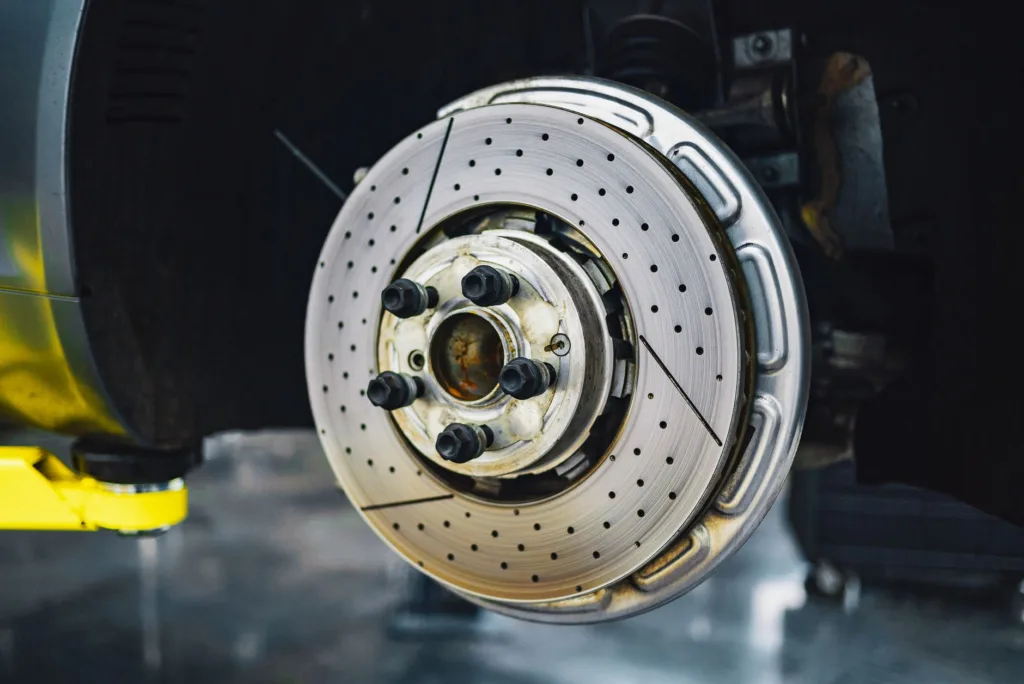
You should replace brake rotors when they are below the manufacturer’s minimum thickness, badly scored, cracked, heat-damaged, warped enough to cause vibration, or worn unevenly enough that machining will not restore a safe surface. In many cases, rotors do not need replacement every time you change brake pads. But if the rotor condition is poor, installing new pads on old damaged rotors can lead to noise, weak braking, vibration, and shorter pad life.
Brake rotors are a wear item, just like pads. The difference is that rotors usually last longer and need to be evaluated based on condition, thickness, and performance rather than mileage alone. Some vehicles go through more than one set of pads before the rotors need replacement, while others need rotors sooner because of driving style, towing, hills, rust, or repeated hard braking.
If you are unsure, the safest approach is simple. Measure rotor thickness, inspect the braking surface, and compare the condition to the service limits in your owner’s manual or repair information for your vehicle. That tells you more than mileage by itself ever will.
What Brake Rotors Do and Why Their Condition Matters
Brake rotors are the metal discs that your brake pads squeeze to slow the vehicle. When you press the brake pedal, hydraulic pressure pushes the pads against the rotor faces. That friction converts motion into heat, and the vehicle slows down.
Because rotors absorb and shed a lot of heat, they wear gradually over time. Every brake application removes a tiny amount of metal. Heat cycles, moisture, road salt, and long periods of sitting can also affect the rotor surface.
A healthy rotor should have:
- A relatively smooth friction surface
- Enough remaining thickness
- No structural damage such as cracks
- Even wear across the rotor face
- Stable braking performance without pulsation or severe vibration
If the rotor surface or thickness falls outside acceptable limits, braking performance can suffer. That may show up as shaking, noise, longer stopping distances, uneven pad wear, or poor pedal feel.
When Should You Replace Brake Rotors?
The most accurate answer is this: replace rotors when inspection shows they are worn out, damaged, or no longer serviceable. There is no universal mileage that fits every vehicle. However, there are several clear signs that point to replacement.
Replace Rotors When They Are Below Minimum Thickness
Every rotor has a minimum thickness specification set by the vehicle manufacturer. Once a rotor wears below that number, it should be replaced. A rotor that is too thin cannot manage heat as well and may be more prone to cracking, distortion, or reduced braking stability.
Thickness is usually checked with a micrometer at several points around the rotor. Looking at the rotor is not enough. A rotor can appear usable but still measure below spec.
Replace Rotors When They Are Deeply Grooved or Scored
Light surface marks are common and not always a problem. Deep grooves or scoring are different. They can reduce pad contact, create noise, and accelerate pad wear.
If the grooves are minor and the rotor is still thick enough, machining may be possible on some vehicles. If the damage is deep or the rotor would end up too thin after machining, replacement is the better option.
Replace Rotors When They Cause Brake Pulsation or Vibration
If the steering wheel or brake pedal shakes during braking, the rotor surface may be uneven, or the rotor may have thickness variation. Many drivers call this a “warped rotor,” although the actual issue is often uneven material transfer or rotor thickness variation rather than dramatic physical warping.
Either way, if the problem cannot be corrected by machining within specification, the rotor should be replaced.
Replace Rotors When They Show Heat Damage or Cracking
Brake rotors operate under intense heat, especially in mountain driving, towing, performance driving, stop-and-go traffic, or emergency braking. Severe overheating can leave blue spots, hard spots, surface checking, or visible cracks.
Fine superficial heat marks may not always mean immediate failure, but actual cracks are a replacement issue. Cracked rotors should not be reused.
Replace Rotors When Rust Damage Is Severe
Surface rust after rain or overnight parking is normal and often clears after a few brake applications. Heavy rust scaling, flaking edges, or deeply corroded braking surfaces are different. In snow-belt areas or coastal climates, rust can make a rotor unusable even if the vehicle has relatively low mileage.
This is especially common on vehicles that sit for long periods or are driven gently enough that the rotor surfaces never clean up fully.
Replace Rotors When Wear Is Uneven
A rotor should wear evenly on both sides. If one side is much more worn than the other, there may be a seized caliper slide, sticking brake pad, or hydraulic issue. Uneven wear often leads to noise, pull, vibration, and reduced braking efficiency.
In that situation, the underlying brake hardware problem should be fixed too. Replacing the rotor without addressing the cause can lead to the same problem returning.
Do You Need to Replace Rotors Every Time You Replace Brake Pads?
No. Rotors do not automatically need replacement with every brake pad change. That is a common misunderstanding.
On many vehicles, rotors can last through more than one set of pads if they remain thick enough, smooth enough, and free of damage. But they should still be inspected every time the pads are serviced.
Think of it this way:
| Brake Service Situation | Rotor Likely OK to Reuse? | Notes |
|---|---|---|
| Pads worn, rotors smooth and above minimum thickness | Possibly yes | Depends on rotor condition and manufacturer guidance |
| Pads worn, rotors lightly marked but still serviceable | Sometimes | May be machined if allowed and still within spec |
| Pads worn, rotors deeply grooved or vibrating | No | Replacement is usually the better fix |
| Pads worn, rotors below minimum thickness | No | Rotors should be replaced |
| Pads worn, rotors cracked or severely rusted | No | Rotors should be replaced |
Some repair shops recommend replacing rotors with every pad change because many modern rotors are relatively thin to begin with, and machining may not leave enough remaining thickness. Also, labor overlap often makes replacement more practical than machining. That does not mean rotors are always automatically worn out. It means condition and service limits decide the answer.
How Long Do Brake Rotors Usually Last?
Brake rotor lifespan varies widely. You may see rough estimates of around 30,000 to 70,000 miles, but rotor life varies too much for that range to serve as a replacement schedule. Some rotors last considerably longer, while others need replacement much sooner because of wear, corrosion, overheating, or other brake problems.
Rotor life depends on:
- Vehicle weight
- Driving habits
- City vs highway use
- Towing or hauling
- Mountain driving
- Brake pad material
- Rotor design and quality
- Climate and road salt exposure
- How often the brake system is serviced
Real-World Examples of Rotor Lifespan
A commuter who does mostly highway driving in a mild climate may get very long life from rotors because braking is less frequent and less intense. On the other hand, a driver in a hilly city with frequent stop-and-go traffic may wear rotors much faster.
A pickup used for towing can also wear front rotors more quickly because of repeated heat buildup. Likewise, a car parked for long periods in a wet or salty environment may need rotors due to corrosion before normal friction wear ever becomes the main issue.
Common Signs Your Brake Rotors May Need Replacement
Not every symptom means the rotors are bad, but these are common warning signs worth checking.
Brake Pedal Pulsation
If the brake pedal pulses when you slow down, especially from higher speeds, the rotor may have uneven thickness or surface variation. This is one of the most common rotor-related complaints.
Steering Wheel Vibration While Braking
If the steering wheel shakes mainly when the brakes are applied, the front rotors are often involved. Suspension or tire issues can also cause vibration, but brake-related shaking that appears only under braking often points to rotor problems.
Squealing or Grinding
Noise alone does not always mean rotors are bad. Worn brake pads, rust buildup, or hardware issues can also cause it. But if the pads have worn down enough to damage the rotor surface, rotor replacement may be needed along with new pads.
Visible Deep Grooves
If you can clearly see or feel pronounced grooves in the rotor surface, the rotor should be inspected closely. Minor wear marks are normal. Deep channels are not.
Blue Spots or Heat Marks
Blue or dark patches can indicate overheating. This may be caused by aggressive braking, dragging calipers, or repeated heavy loads. Heat-damaged rotors can become noisy or unstable under braking.
Heavy Rust on the Rotor Face
Surface rust that wipes away is normal. Thick rust ridges, pitting, and flaking are more serious. This is especially common on rear rotors of vehicles that rely heavily on front braking during gentle driving.
How Brake Rotors Are Inspected
A proper rotor inspection involves more than a quick glance through the wheel spokes. A technician or experienced DIYer will usually inspect several things.
Rotor Thickness
This is the first major checkpoint. The rotor is measured with a brake micrometer at multiple points. The measurements are compared to the manufacturer’s minimum thickness.
Rotor Surface Condition
The braking surface is checked for grooves, glazing, rust pitting, heat spots, and cracking. Both sides of the rotor matter, not just the outer face you can see easily.
Lateral Runout and Thickness Variation
If pulsation is present, runout may be measured with a dial indicator. Excessive lateral runout or thickness variation can create uneven braking feel and vibration.
Pad Wear Pattern
The pads can reveal a lot about rotor condition. Tapered pad wear, one-sided wear, or pad deposits may indicate caliper or hardware issues affecting the rotors.
Caliper and Hardware Condition
Bad slide pins, sticking pistons, seized pad abutments, and worn hardware can all damage otherwise usable rotors. This is why replacing only the obvious worn part is sometimes not enough.
Can Brake Rotors Be Resurfaced Instead of Replaced?
Sometimes, yes. Resurfacing, also called machining or turning, removes a small amount of metal from the rotor face to restore a more even surface. This can help if the rotor has minor grooves or mild vibration issues and still has enough thickness left afterward.
However, resurfacing is not always the best option. Many modern rotors are designed with less extra thickness than older designs. After machining, the rotor may be too close to minimum thickness to provide good long-term service.
Rotors generally should not be resurfaced if they are:
- Already below minimum thickness
- Too close to minimum thickness after machining
- Cracked
- Severely rusted or pitted
- Badly heat-damaged
- Structurally compromised
Resurfacing vs Replacing Brake Rotors
| Factor | Resurfacing | Replacing |
|---|---|---|
| Minor grooves | Often possible | Also possible |
| Below minimum thickness | No | Yes |
| Cracks present | No | Yes |
| Severe rust | Usually not ideal | Often best |
| Long-term durability | May be reduced if rotor is near limit | Usually better |
| Cost | Can be lower, depending on labor | Can be more practical on many vehicles |
Should You Replace Rotors in Pairs?
In most cases, yes. Brake rotors are usually replaced in axle pairs, meaning both front rotors together or both rear rotors together. This helps maintain balanced braking and even performance side to side.
If one rotor is significantly worn or damaged, the rotor on the other side often has similar age and wear. Replacing just one rotor on an axle can create uneven braking characteristics unless there is a very unusual situation.
What Happens If You Wait Too Long to Replace Brake Rotors?
Delaying rotor replacement can lead to more than annoying brake noise. It can also increase repair costs and affect how the vehicle drives.
Possible consequences include:
- Reduced braking smoothness
- Longer stopping distances in some conditions
- Brake pedal pulsation
- Premature brake pad wear
- Damage to calipers or hardware from overheating
- Persistent noise
- Poor pad bedding on an uneven rotor surface
If the rotor is badly damaged, the new pads may not seat correctly. That can cause uneven contact, hot spots, and disappointing braking performance even after a brake job.
Typical Costs to Replace Brake Rotors
Brake rotor replacement cost depends on the vehicle, whether the front or rear brakes are involved, labor rates in your area, and whether pads are replaced at the same time. Prices vary widely, but it is common to replace rotors and pads together because labor overlaps and both parts wear as a system.
As a general ownership expectation:
- Compact cars are often on the lower end of the cost range
- Trucks, SUVs, and performance vehicles usually cost more
- Rear brake service may be more involved if the parking brake design is integrated
- Rust-belt vehicles may require extra labor if parts are seized
If a shop recommends rotors, ask what they measured and what condition they found. A good explanation should include thickness, surface condition, and whether machining was possible or appropriate.
How Driving Habits Affect Rotor Life
The way a vehicle is driven has a major effect on rotor wear and heat stress.
City Driving
Frequent stops increase brake use and heat cycles. Rotors on vehicles driven mostly in town generally wear faster than those on highway commuters.
Highway Driving
Highway miles usually involve fewer stops, so rotors may last longer. But repeated high-speed braking can still create substantial heat.
Towing and Heavy Loads
Extra weight means the brakes must absorb more energy. This increases rotor temperature and can shorten rotor life, especially on downhill grades.
Aggressive Driving
Late braking and repeated hard stops can create hot spots and accelerated wear. Even a relatively new rotor can develop issues if it is overheated regularly.
Gentle Driving in Rust-Prone Areas
This may sound surprising, but very gentle braking can sometimes allow rear rotors to rust more heavily, especially on vehicles where the front brakes do most of the work. Occasional normal braking helps keep the surfaces cleaner.
Common Mistakes Vehicle Owners Make With Brake Rotors
Assuming Rotors Always Need Replacement With Pads
Sometimes they do, sometimes they do not. Automatic replacement without inspection can lead to unnecessary cost. Condition and specification should make the decision.
Assuming Rotors Never Need Replacement Until They Crack
This is the opposite mistake. A rotor can be worn out long before visible cracking appears. Minimum thickness and brake performance matter.
Ignoring Brake Pulsation for Too Long
Some drivers keep using the vehicle for months with shaking under braking. That can worsen pad wear and reduce comfort and control. It is better to inspect the issue early.
Replacing Pads Without Addressing Rotor Surface Problems
New pads on damaged rotors can lead to noise, poor bedding, and uneven wear. Brake parts work together, so the whole system needs evaluation.
Skipping Caliper and Hardware Inspection
A sticking caliper can ruin new rotors quickly. Slide pins, pad hardware, boots, and piston movement all matter.
Trusting Mileage Alone
One car may need rotors relatively early, while another may remain within specification for much longer. Mileage is a clue, not a final answer.
Practical Maintenance Tips to Help Brake Rotors Last Longer
If you replace pads or rotors at home, remember that the job does not end when the new brake parts are installed. When the wheel goes back on, use a proper torque wrench to tighten the lug nuts to the vehicle manufacturer’s specification.
Other good brake maintenance habits include:
- Have the brakes inspected whenever pads are serviced
- Address vibration, squealing, or grinding early
- Fix sticking calipers and seized slide pins promptly
- Avoid repeated hard braking when possible
- Use proper braking technique on long descents, including lower gears when appropriate
- Drive the vehicle regularly if possible to reduce rust buildup from sitting
- Follow manufacturer recommendations for brake service
- Bed new pads and rotors correctly if your repair procedure calls for it
These habits will not make rotors last forever, but they can reduce uneven wear and heat-related problems.
When to Have a Professional Inspect Your Rotors
You should have your brake rotors inspected if you notice shaking when braking, grinding noises, visible rotor damage, uneven braking feel, or a brake job is already due. If the wheels are already off for tire service or suspension work, that can also be a good time to check brake condition.
Professional inspection is especially helpful if:
- You are not comfortable measuring rotor thickness
- The vehicle has electronic parking brake systems
- You suspect a caliper problem
- The brakes have overheated
- The vehicle has been sitting for a long time
FAQ
How do I know if my brake rotors need to be replaced?
Common signs include brake pulsation, vibration while braking, deep grooves, heavy rust, overheating marks, or rotor thickness below the manufacturer’s minimum specification.
Should brake rotors be replaced with every brake pad change?
No. Rotors should be inspected every time pads are changed, but they only need replacement if they are worn out, damaged, or out of specification.
Can I drive with bad brake rotors?
You may still be able to drive, but it is not wise to ignore bad rotors. Damaged or excessively worn rotors can reduce braking quality, increase vibration, and wear pads faster.
How many miles do brake rotors last?
There is no fixed replacement mileage. Rough estimates such as 30,000 to 70,000 miles are sometimes used, but actual rotor life varies widely with driving style, climate, vehicle weight, brake system condition, and rotor design. Inspection and measured condition are more useful than mileage alone.
Is it better to resurface or replace rotors?
It depends on thickness and condition. Minor surface issues may be corrected by resurfacing if the rotor remains within spec. Thin, cracked, severely rusted, or badly damaged rotors should be replaced.
Can warped rotors fix themselves?
No. If braking vibration is caused by rotor thickness variation, surface deposits, or heat damage, the issue usually requires inspection and either resurfacing or replacement.
Do rear rotors wear out as fast as front rotors?
Usually not. Front brakes typically handle more of the braking load. However, rear rotors can still wear out or rust badly, especially on vehicles that sit often or are driven in wet and salty conditions.
Can rust alone mean brake rotors need replacement?
Yes, if the rust is severe. Light surface rust is normal. Deep pitting, scaling, flaking, or heavy corrosion on the braking surface can make the rotor unserviceable.
Final Takeaway
You should replace brake rotors when inspection shows they are too thin, too damaged, too uneven, or too corroded to continue serving safely and effectively. The decision should be based on measurable condition, not guesswork and not mileage alone.
For many vehicles, rotors do not need replacement at every pad change. But they do need inspection every time. If you feel pulsation, hear grinding, see heavy grooves, or know the brakes have been overheated, it is time for a closer look. Good brake service is about treating the pads, rotors, calipers, and hardware as one system, not as separate parts.