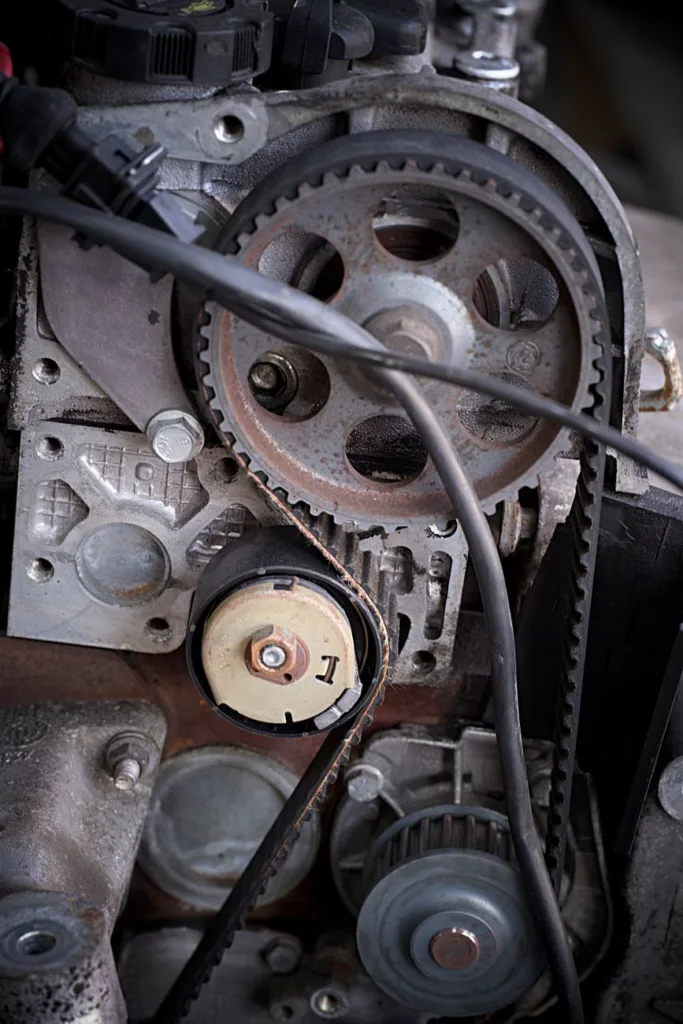
A timing chain often lasts 150,000 miles or more, and in many engines it can last the life of the vehicle. That said, timing chains are not truly permanent. Poor oil maintenance, low oil levels, sludge buildup, defective chain tensioners, or engine design issues can shorten their life significantly. If your car has timing chain noise, cam/crank timing fault codes, rough running, or a check engine light, mileage alone does not mean the chain is fine.
The most accurate answer is this: a well-maintained timing chain usually lasts much longer than a timing belt, but it still depends heavily on engine design and maintenance history. Some chains run trouble-free for 200,000 miles, while others stretch or develop tensioner problems much earlier.
If you are trying to decide whether your timing chain needs attention, focus on symptoms, oil service history, and manufacturer guidance, not just odometer mileage.
What a Timing Chain Does
The timing chain connects the crankshaft to the camshaft or camshafts. Its job is to keep the engine’s internal moving parts synchronized so the valves open and close at the correct time during the combustion cycle.
In simple terms, the timing chain makes sure the top half and bottom half of the engine stay in sync. If that timing is off, even slightly, the engine may run poorly. If it is off badly, the engine may not run at all, and in many engines internal damage can occur.
Unlike a timing belt, a timing chain is made of metal and runs inside the engine, lubricated by engine oil. That is why oil condition matters so much to chain life.
How Long Does a Timing Chain Usually Last?
There is no single replacement interval that applies to every vehicle, because many manufacturers do not list a routine replacement schedule for timing chains. Instead, the chain is typically considered a long-life component.
In real-world ownership, a timing chain commonly lasts within these ranges:
| Condition | Typical Timing Chain Life | Notes |
|---|---|---|
| Well-maintained engine | 150,000 to 250,000+ miles | Regular oil changes help chain, guides, and tensioners last longer |
| Average maintenance history | 120,000 to 200,000 miles | Many chains still last a long time, but wear risk rises |
| Poor oil maintenance | Can fail much earlier | Sludge, dirty oil, and low oil pressure accelerate wear |
| Engines with known chain or tensioner issues | Sometimes under 100,000 miles | Design problems can override normal expectations |
This range includes not only the chain itself, but also the related parts that often cause trouble first. In many cases, the actual problem is not a snapped chain. It is chain stretch, a worn guide, or a failing hydraulic tensioner.
Why Some Timing Chains Last Much Longer Than Others
Two vehicles with similar mileage can have very different timing chain condition. The difference often comes down to lubrication, driving habits, and engine design.
Oil Change History Matters More Than Most Owners Realize
Timing chains depend on clean oil. The chain, guides, and hydraulic tensioner all rely on proper lubrication and oil pressure. If oil changes are skipped or stretched too far, the chain system can wear faster.
Dirty oil can lead to sludge and varnish buildup. That buildup may affect the tensioner and chain guides, and once that happens the chain can develop slack or abnormal wear.
Short Trip Driving Can Be Hard on the Engine
Frequent short trips can contribute to oil contamination because the engine may not fully warm up long enough to burn off moisture and fuel dilution. Over time, this can degrade oil quality faster.
That does not mean short-trip driving automatically ruins a timing chain. It means oil service becomes even more important for drivers who mostly make quick errands or low-speed city trips.
Low Oil Level Is a Major Risk
Running an engine low on oil can damage timing chain components quickly. Hydraulic tensioners need oil pressure to maintain proper chain tension. If oil level drops too low, the chain may rattle on startup or under load.
Even a strong chain cannot last long if the system around it is starved of oil.
Some Engines Have Better Chain Designs Than Others
Not every timing chain setup is equally durable. Some engines use robust chains with long-lasting guides and tensioners. Others have a history of premature chain stretch, weak guide materials, or tensioner problems.
This is why blanket advice like “timing chains never need replacement” is misleading. It is true for some vehicles, but not all.
Timing Chain vs Timing Belt Lifespan
Many drivers confuse timing chains and timing belts, but they differ in both construction and expected service life.
| Feature | Timing Chain | Timing Belt |
|---|---|---|
| Material | Metal | Reinforced rubber |
| Location | Inside engine, lubricated by oil | Usually behind external cover, dry operation |
| Typical lifespan | Often 150,000 miles or more | Often 60,000 to 100,000 miles, depending on vehicle |
| Routine replacement interval | Often none listed | Usually manufacturer-specified |
| Common failure mode | Stretch, tensioner failure, guide wear | Age cracking, tooth wear, breakage |
| Maintenance sensitivity | Very sensitive to oil quality | Not oil-lubricated, but sensitive to age and mileage |
In general, timing chains last longer than timing belts. However, when a chain system does need repair, the job can be expensive because it is usually more labor-intensive.
Does a Timing Chain Need Preventive Replacement?
Usually, no routine preventive replacement is required unless your manufacturer says otherwise or your engine has known timing chain issues. Most owners replace a timing chain only when symptoms appear, diagnostic testing confirms a problem, or the engine is already apart for a related repair.
That said, there are exceptions. Some owners choose preventive replacement if:
- The vehicle has very high mileage and known chain weakness
- There is startup rattle or confirmed chain stretch
- The front of the engine is already being disassembled for major work
- The engine has a documented history of tensioner or guide failures
If there are no symptoms and the engine is quiet, properly maintained, and not known for chain problems, many technicians would not recommend replacing it just because the car passed a certain mileage milestone.
Signs Your Timing Chain May Be Wearing Out
The chain usually gives warnings before complete failure. Recognizing those warning signs early can prevent more serious engine damage.
Rattling Noise on Cold Start
A brief rattling noise during startup can point to chain slack or a weak tensioner, especially if the sound comes from the front of the engine. Some engines are more prone to this than others.
A one-time noise does not always mean the chain is failing. But repeated cold-start rattles should not be ignored.
Check Engine Light
A stretched timing chain can cause the engine computer to detect camshaft and crankshaft timing that is out of range. This may trigger a check engine light.
Common related trouble codes can involve camshaft timing performance, correlation errors, or variable valve timing issues. The code itself does not prove the chain is bad, but it is a strong reason to investigate.
Rough Idle or Poor Engine Performance
If valve timing starts drifting due to chain wear, the engine may idle poorly, hesitate, lose power, or misfire. These symptoms can overlap with many other issues, so diagnosis matters.
Metal Shavings in the Oil
Unusual metal debris in the oil or oil filter can indicate internal wear. In some cases, timing chain guides or chain components may be deteriorating.
This is especially concerning if it appears alongside timing-related noise or fault codes.
Hard Starting or No-Start Condition
If chain timing becomes severely off, the engine may crank longer than normal or fail to start. On interference engines, severe chain failure can allow valves and pistons to contact each other, causing major damage.
What Happens If a Timing Chain Fails?
A failed timing chain can be one of the most serious engine problems a vehicle can have. The outcome depends on how the engine is designed and how the failure occurs.
Minor Timing Deviation
If the chain is only slightly stretched, you may notice rough running, fault codes, or a check engine light. The engine may still drive, but performance and fuel economy can suffer.
Jumped Timing
If the chain jumps teeth on a sprocket, valve timing may suddenly shift. The engine may run very badly or stop running altogether.
Broken Chain
If the chain breaks completely, the camshaft stops turning in sync with the crankshaft. In many modern interference engines, this can bend valves and sometimes damage pistons or the cylinder head.
That can turn a repair into an engine rebuild or engine replacement situation.
At What Mileage Should You Start Paying Attention?
Even though many timing chains last well beyond 150,000 miles, it is smart to be more alert once a vehicle reaches higher mileage.
| Mileage Range | What to Do | Risk Level |
|---|---|---|
| Under 75,000 miles | Maintain oil changes and monitor for unusual symptoms | Usually low, unless engine has known issues |
| 75,000 to 125,000 miles | Stay consistent with oil service and pay attention to startup noises | Still usually low to moderate |
| 125,000 to 175,000 miles | Be more watchful for rattle, fault codes, and performance changes | Moderate, depending on engine and maintenance history |
| 175,000 miles and up | Inspect symptoms carefully and consider diagnostic evaluation if concerns appear | Moderate to higher, especially on neglected engines |
These mileage ranges are not replacement intervals. They are simply practical checkpoints for paying closer attention.
How Mechanics Check Timing Chain Condition
A timing chain problem is not usually diagnosed by mileage alone. A technician will typically look at symptoms, scan data, and sometimes engine noise patterns before recommending major repairs.
Computer Scan for Timing-Related Codes
Modern vehicles can store trouble codes related to camshaft position, crankshaft position, and timing correlation. This helps narrow the problem.
Listening for Startup and Running Noise
An experienced technician may identify chain slap, guide noise, or tensioner problems by the sound and when it occurs. Noise at cold startup is a common clue.
Reviewing Oil Maintenance History
If the vehicle has a history of missed oil changes, sludge, or low oil operation, suspicion increases.
Mechanical Inspection
On some engines, direct inspection requires significant disassembly. In other cases, technicians may use scan data or timing measurements before opening the engine.
This is one reason chain-related diagnosis can take time. Replacing the chain without confirming the problem can be expensive guesswork.
Typical Timing Chain Replacement Cost
Timing chain replacement is usually more expensive than timing belt replacement because the chain is inside the engine and labor can be substantial.
| Repair Type | Typical Cost Range | Notes |
|---|---|---|
| Timing chain replacement | $800 to $2,500+ | Varies widely by engine layout and labor time |
| Chain, guides, tensioner, seals | $1,200 to $3,000+ | Common full-service approach |
| Major engine damage after chain failure | Several thousand dollars | Can involve valve damage or engine replacement |
Costs vary by vehicle, engine size, local labor rates, and whether related components are replaced at the same time. Some engines require far more labor than others.
Factors That Shorten Timing Chain Life
If you want to estimate whether a chain may wear early, look at the risk factors below.
- Infrequent oil changes
- Using the wrong oil viscosity, if it affects pressure or lubrication
- Chronic low oil level
- Sludge buildup
- Frequent cold starts and short trips without proper maintenance adjustment
- Overheating issues that degrade oil and engine components
- Engine designs with weak guides or tensioners
- Ignoring early warning noises or check engine lights
Often, the chain itself is only part of the story. The guides and tensioner are just as important to the system’s lifespan.
How to Make a Timing Chain Last Longer
You cannot eliminate wear entirely, but you can improve the odds that the chain lasts a very long time.
Follow Oil Change Intervals Carefully
Use the oil grade and specification listed by the manufacturer. If you drive under severe conditions, such as frequent short trips, towing, extreme temperatures, or heavy stop-and-go driving, timely oil service matters even more.
Check Oil Level Between Changes
Some engines consume oil gradually, especially at higher mileage. A chain system does not care whether the oil was changed recently if the crankcase is now low.
Checking the dipstick regularly is a simple habit that can prevent expensive internal wear.
Do Not Ignore Startup Rattle
A brief rattle that appears every morning is not something to put off for months. Catching a weak tensioner early may prevent a bigger failure later.
Address Check Engine Lights Promptly
Timing-related codes are not always caused by the chain, but they should be diagnosed. Delaying may allow a minor issue to become a major repair.
Keep the Engine Healthy Overall
Overheating, poor lubrication, sludge, and neglected maintenance all work against timing chain life. A healthy engine environment helps every internal part last longer.
Real-World Examples of Timing Chain Lifespan
It helps to think about timing chain life in ownership scenarios rather than just numbers.
Highway Commuter With Excellent Maintenance
A driver who mostly does long highway commutes and changes oil on time may see the chain last 200,000 miles or more with no issue. Steady operating temperatures and clean oil are favorable conditions.
City Driver With Short Trips
A vehicle used for short trips around town may experience more oil contamination over time. If oil changes are still done on schedule and the oil level is monitored, the chain may still last a long time. If maintenance slips, wear risk rises.
Used Car With Unknown History
A vehicle bought at 140,000 miles with incomplete service records is harder to judge. Even if it runs well, startup noise, sludge, or timing codes would be more concerning because prior neglect may already have affected the chain system.
Engine With Known Timing Chain Issues
Some engines have a reputation for chain stretch or tensioner failures earlier than expected. In those cases, it is smart to research technical service bulletins, owner experiences, and common failure mileage for that specific engine.
Common Mistakes Owners Make With Timing Chains
Timing chain problems are often made worse by avoidable decisions.
Assuming a Timing Chain Never Needs Attention
This is probably the most common misconception. Timing chains usually last a long time, but “lifetime” does not mean guaranteed for the entire life of every vehicle.
Ignoring Oil Consumption
Some owners change the oil on time but never check the level in between. If the engine burns oil, the chain system may still be running under poor lubrication conditions.
Delaying Diagnosis of Startup Noise
A small cold-start rattle may be the first warning sign. Waiting until the engine runs poorly can lead to a much more expensive repair.
Replacing Sensors Without Confirming the Root Cause
Camshaft and crankshaft codes can tempt people to replace sensors first. Sometimes that fixes the problem, but sometimes the real issue is chain stretch or a timing actuator problem. Proper diagnosis matters.
Buying a High-Mileage Vehicle Without Listening Carefully
When inspecting a used car, a quiet cold start and good maintenance records can tell you a lot. Buyers who only focus on cosmetics may miss costly internal engine issues.
When You Should Replace a Timing Chain
Replacement is usually justified when one or more of these conditions apply:
- Confirmed chain stretch beyond acceptable limits
- Failed or weak timing chain tensioner
- Broken or excessively worn guides
- Persistent timing correlation fault codes traced to chain wear
- Noticeable chain rattle combined with diagnostic evidence
- Engine disassembly for related repairs where replacement makes sense
In most cases, the best repair is not just the chain alone. It often includes the chain, guides, tensioner, and related seals or sprockets, depending on the engine and wear pattern.
Should You Buy a Used Car With a High-Mileage Timing Chain?
Yes, sometimes. High mileage alone is not a reason to reject a vehicle with a timing chain. What matters more is condition and maintenance history.
Look for these good signs:
- Documented regular oil changes
- No startup rattle
- No check engine light
- Smooth idle and consistent power
- Clean oil condition and no obvious sludge signs
Be cautious if you notice:
- Rattling from the front of the engine
- Timing-related fault codes
- Poor service records
- Evidence of oil neglect
- Rough running or hard starting
For a higher-mileage purchase, a pre-purchase inspection is often worth the cost.
Maintenance Tips for Owners Who Want to Avoid Timing Chain Trouble
- Use the manufacturer-specified oil and filter
- Do not stretch oil changes far past recommended intervals
- Check oil level regularly, especially on older or higher-mileage engines
- Investigate startup rattles instead of waiting for them to get worse
- Scan and diagnose check engine lights promptly
- Research known issues if your engine family has a timing chain reputation
- Keep cooling and lubrication systems in good condition
These steps are not complicated, but they make a real difference over tens of thousands of miles.
Frequently Asked Questions
Can a timing chain last 300,000 miles?
Yes, some timing chains do last 300,000 miles, especially in well-maintained engines with strong chain designs. It is possible, but not guaranteed.
How do I know if my timing chain needs replacing?
Common signs include startup rattle, timing-related check engine codes, rough running, hard starting, or confirmed chain stretch during diagnosis.
Is a timing chain supposed to be replaced at a set interval?
Usually no. Many timing chains do not have a routine replacement interval, unlike timing belts. Always check your owner’s manual or manufacturer service information for your exact vehicle.
What is the average life of a timing chain tensioner?
A tensioner often lasts a long time, but it can fail before the chain itself. Its lifespan depends heavily on oil quality, engine design, and maintenance history.
Can I drive with a noisy timing chain?
It is risky. A brief investigation delay may be unavoidable, but continued driving with clear chain noise can lead to jumped timing or severe engine damage.
Does synthetic oil help timing chains last longer?
Using the correct oil, whether synthetic or manufacturer-specified blend, can help protect chain components by maintaining better lubrication and cleanliness. The most important part is using the correct oil and changing it on time.
Is timing chain replacement worth it on an older car?
It depends on the vehicle’s value, overall condition, and the repair cost. If the rest of the car is solid, replacing the chain can make sense. If the car has many other major issues, the decision is harder.
Can a bad timing chain cause a check engine light without noise?
Yes. Some timing chain problems first show up as cam/crank correlation codes or performance issues before obvious noise becomes noticeable.
Final Takeaway
A timing chain typically lasts 150,000 miles or more, and in many vehicles it can last the life of the engine. The biggest factor is maintenance, especially regular oil changes and keeping the oil level correct.
If your engine is quiet, well-maintained, and not known for chain issues, you may never need to replace the timing chain. But if you notice startup rattle, timing-related fault codes, rough running, or signs of oil neglect, it is smart to have the system checked sooner rather than later.
The safest approach is simple: do not replace a timing chain based on mileage alone, but do not ignore symptoms just because timing chains are designed to last a long time.