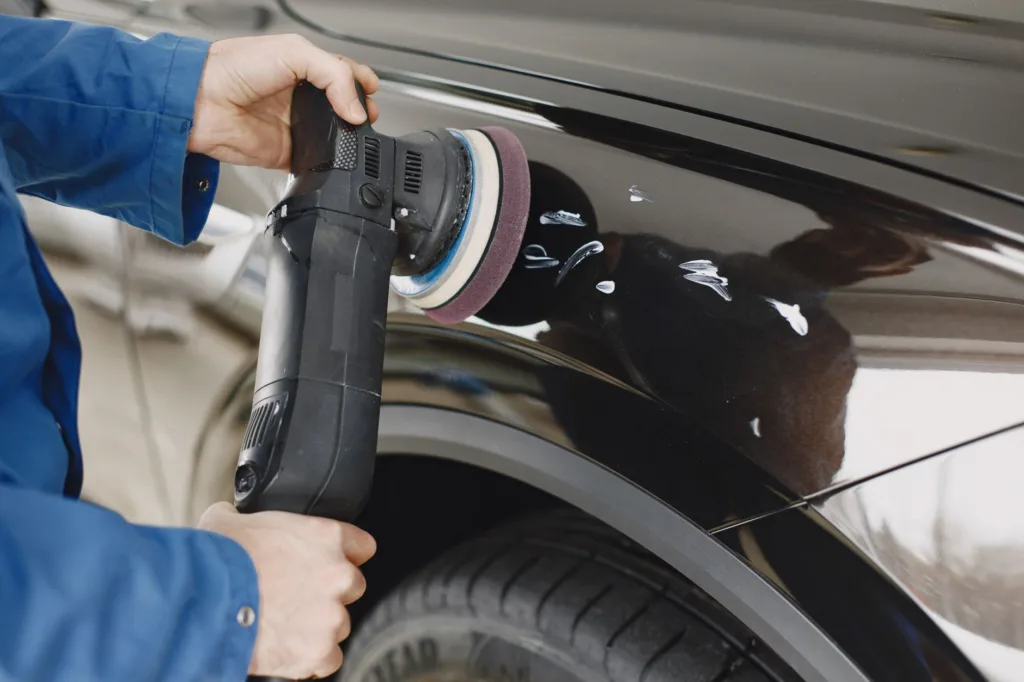
Yes, many small scratches can be removed, but not all of them. The main factor is how deep the scratch goes into the paint. Light marks in the clear coat are often fixable with polishing or light abrasive correction, while scratches that reach the color coat or primer usually need touch-up paint, repainting, or professional repair.
Before trying to fix a scratch, it helps to know what you are actually looking at. A surface mark from a shopping cart, a brush wash, or a branch may only affect the clear coat. Deeper damage that changes the color, catches a fingernail, or exposes a different layer needs a different approach.
What Counts as a Small Scratch?
People often use the word scratch for several different types of paint damage. Some are truly minor and sit on top of the paint. Others look small from a distance but are deep enough to require more than polishing.
In practical terms, a small scratch is usually a light mark that does not visibly break through the paint system. It may look like a thin white line, a dull streak, or a cluster of fine marks known as swirl marks.
Common types of minor paint damage
- Clear coat scratches: Damage limited to the top protective layer.
- Swirl marks: Fine circular scratches often caused by washing or drying.
- Scuff marks: Transfer from another material, such as rubber or paint.
- Light surface scratches: Shallow marks that may only be visible in direct light.
Signs a scratch may be deeper
- You can feel it clearly with a fingernail.
- The scratch looks white on dark paint or dark on light paint.
- The scratch exposes a different layer, such as primer or metal.
- The mark remains after washing and gentle polishing.
How Car Paint Is Built
Understanding the paint layers makes it much easier to know whether a scratch can be removed. Most modern vehicles use a layered finish that includes a primer, base coat, and clear coat.
- Primer: The foundation layer that helps paint stick to the body panel.
- Base coat: The color layer that gives the car its visible paint color.
- Clear coat: The transparent protective layer on top.
When a scratch only affects the clear coat, it is often removable or at least highly reducible. If the scratch goes into the base coat or primer, polishing alone will not restore the missing material.
Why this matters for repair
Polishing works by gently leveling the surface around the scratch. That means it can remove shallow damage in the clear coat, but it cannot bring back paint that is already gone. Once the color layer is damaged, the repair shifts from correction to filling and refinishing.
Can Small Scratches Be Removed Completely?
Sometimes yes, sometimes no. The more shallow the scratch, the better the result. Many light scratches and swirl marks can be removed completely or made nearly invisible. Deeper scratches can usually only be improved, not fully erased, unless the panel is repainted.
Here is the simplest way to think about it. If the scratch is in the clear coat, correction is often possible. If the scratch has removed color, the area may need touch-up work. If the scratch reaches the primer or metal, professional repair is often the most durable solution.
Quick scratch depth guide
| Scratch depth | Typical appearance | Can it be removed? | Typical solution |
|---|---|---|---|
| Clear coat only | Light mark, swirl, dull line | Often yes | Polishing or compounding |
| Base coat | Colored scratch, visible line | Usually not fully | Touch-up paint and blending |
| Primer exposed | Light gray or white line on colored paint | No | Touch-up and refinishing |
| Metal exposed | Shiny bare metal or rust risk | No | Immediate repair to prevent corrosion |
How to Tell If a Scratch Is Shallow Enough to Remove
You do not need professional tools to make a good first assessment. A few simple checks can tell you whether the scratch is likely a polishing job or a deeper repair.
1. Wash the area first
Sometimes what looks like a scratch is just dirt, paint transfer, or residue. Wash the panel carefully with car soap and water before evaluating the damage. Dry it with a clean microfiber towel.
2. Look at the scratch in strong light
Sunlight or a bright inspection light will make surface damage easier to see. Move your head and change angles. If the line disappears at some angles and reappears at others, it may be shallow.
3. Do the fingernail test carefully
Gently drag a fingernail across the mark. If it barely catches or does not catch at all, the scratch is more likely in the clear coat. If it catches clearly, the damage may be deeper. This is not a perfect test, but it is a useful one.
4. Check for color change
If the scratch is only a different shade of the same paint reflection, it may be surface-level. If you see a different layer beneath the paint, such as gray primer or a metallic look from exposed metal, the scratch is deeper than polishing can fix.
5. Try a gentle wipe
Some marks are simply transfer from another object. A small amount of detailing cleaner or soap and water may remove them. If the mark remains unchanged, it is more likely actual paint damage.
Methods That Can Remove Small Scratches
Different scratch types call for different repair methods. The goal is to use the least aggressive method that still solves the problem. Starting too aggressively can create more damage than the scratch itself.
Washing and decontamination
Before correcting paint, remove dirt, tar, and bonded contaminants. A clean surface helps you see the real scratch and reduces the chance of dragging grit across the paint during correction. In some cases, what appeared to be a scratch turns out to be residue that comes off with proper cleaning.
Polishing
Polishing is one of the most common ways to remove small scratches in the clear coat. It works by using fine abrasives to smooth the edges of the damaged area. This reduces the visibility of the scratch and can sometimes make it disappear entirely.
Light polishing is often enough for:
- Swirl marks
- Fine wash scratches
- Very shallow clear coat marks
- Light oxidation with minor scratching
Compounding
Compounding is more aggressive than polishing. It removes a small amount of clear coat to level deeper surface scratches. This can produce excellent results on moderate clear coat damage, but it also increases the risk of leaving haze or thinning the clear coat if overused.
Compounding is usually reserved for scratches that are still within the clear coat but too deep for a finishing polish alone.
Touch-up paint
If a scratch has gone through the clear coat and base coat, touch-up paint can help fill the damaged area. The result may not be invisible, but it can stop the scratch from standing out and protect the panel from corrosion.
Touch-up paint is especially important if you can see primer or bare metal. It is not the same as removing the scratch, but it is often the right fix for deeper damage.
Wet sanding
Wet sanding can level deeper surface imperfections, but it is risky and should be approached carefully. It removes material quickly and can permanently damage the clear coat if done incorrectly. For most car owners, it is better left to professionals or used only with experience and proper tools.
Professional paint correction
For scratches that are deeper than basic polishing but not deep enough for repainting, a detailer may use multi-step paint correction. This can combine compounding, polishing, and refinishing techniques to improve the appearance significantly. It is often the best option when you want a strong cosmetic result without a full body shop repair.
What Can and Cannot Be Fixed by Polishing?
Polishing is often misunderstood. It does not magically repair paint. It improves the surface by removing a tiny amount of clear coat around the scratch so the damage becomes less visible.
Usually fixable with polishing
- Fine swirl marks
- Very light scratches in the clear coat
- Haze from poor washing technique
- Minor scuffs that have not penetrated the paint
Usually not fixable with polishing alone
- Scratches that expose primer
- Scratches that cut through the color coat
- Chips with missing paint
- Deep gouges from keys, rocks, or impacts
A useful rule is this: if the scratch is only a visual defect in the clear coat, polishing may help a lot. If paint material is missing, polishing cannot replace it.
Common Causes of Small Scratches
Knowing how scratches happen can help you prevent them later. Many small scratches come from routine use and maintenance, not from major accidents.
Improper washing
Dirty wash mitts, old towels, or washing a dry car can all create fine scratches. This is one of the most common causes of swirl marks. Even automatic wash brushes can leave visible marks on softer paint systems.
Dust and debris during drying
Wiping a dusty surface with a towel can drag grit across the clear coat. The result is often a network of tiny marks rather than one obvious scratch.
Tree branches and bushes
Light contact with vegetation often creates narrow scratches that may look minor but can be surprisingly visible in the sun. If the branch is dry or dusty, the damage may be worse.
Parking lot contact
Shopping carts, car doors, luggage, and other everyday objects often cause small scratches along doors and bumpers. These are usually shallow, but the location can make them easy to notice.
Road debris
Small stones and sand can chip or scratch the paint, especially near the front of the vehicle. These marks may start tiny but can expose the primer if repeated over time.
Comparison: Scratch Types and Repair Options
| Scratch type | How it looks | Repair approach | Difficulty |
|---|---|---|---|
| Swirl marks | Fine circular lines in bright light | Light polishing | Low |
| Clear coat scratch | Thin line, often white or dull | Polishing or compounding | Low to medium |
| Base coat scratch | Visible colored line | Touch-up paint, blending | Medium |
| Primer scratch | Light gray or white exposed layer | Touch-up and refinishing | Medium to high |
| Bare metal scratch | Shiny exposed metal | Urgent repair, corrosion prevention | High |
Can Home Remedies Remove Small Scratches?
Some home methods can help with very shallow scratches, but not all do what they claim. It is important to separate real correction from temporary visual masking.
Toothpaste
Toothpaste is sometimes mentioned as a scratch fix because it contains mild abrasives. In reality, results are inconsistent. It may slightly improve a very light surface mark, but it is not a dependable repair method and can leave haze or uneven finish.
Scratch remover pens and fillers
Some products fill the scratch instead of removing it. That can make the scratch less visible for a while, but the effect may wear off with washing and weather exposure. These are cosmetic solutions, not true paint correction.
Polishing compounds
A proper automotive polishing compound can work well on shallow scratches if used carefully. The key is matching the product to the damage level. Too much abrasion can dull the finish or create more visible marks.
When DIY is a reasonable choice
DIY makes sense when the scratch is light, the car’s paint is in decent shape, and you are comfortable working slowly. It is less suitable for deep scratches, painted plastic trim, or dark glossy finishes where mistakes are easy to spot.
Common Mistakes When Trying to Remove Scratches
Small scratches are often made worse by well-intentioned fixes. Avoiding common mistakes can save time and prevent more expensive damage.
- Starting with aggressive abrasion: Heavy compounds can remove too much clear coat.
- Working on a dirty panel: This can create new scratches.
- Using household cleaners: Some products are too harsh for paint.
- Polishing too long in one spot: This can overheat the paint.
- Ignoring exposed metal: Bare metal can begin to corrode if not repaired.
- Expecting polishing to fix missing paint: It cannot restore lost material.
When Should You Repair a Scratch Right Away?
Some scratches are cosmetic, but others need prompt attention. If the damage has gone through the paint layers, waiting too long can increase the chance of corrosion or peeling.
Repair quickly if you see:
- Exposed primer
- Exposed metal
- Paint chipping around the scratch
- Scratch damage near a seam or edge where rust can start
On plastic bumper covers, rust is not the issue, but deeper scratches can still worsen if moisture and dirt collect in the damage. Quick touch-up can help keep the finish cleaner and more stable.
How Much Does Scratch Removal Usually Cost?
Costs vary a lot based on the size, depth, and location of the scratch, plus whether the work is DIY or professional. A small surface correction can be inexpensive, while deeper bodywork gets more costly quickly.
| Repair level | Typical approach | General cost range |
|---|---|---|
| DIY surface correction | Polishing or compound | Low, often under the cost of professional work |
| Detailer paint correction | Machine polishing, compounding | Moderate |
| Touch-up repair | Paint fill and blend | Moderate |
| Body shop refinishing | Sanding, repainting, clear coat work | Higher, especially for larger panels |
Exact pricing depends on location, vehicle type, paint color, and how visible the damaged area is. Metallic, pearl, or tri-coat finishes are usually harder to match than solid colors.
How to Prevent Small Scratches in the Future
Prevention is usually easier than correction. A few habits can reduce the number of new scratches your car develops over time.
Use proper wash technique
Wash the car with clean mitts, buckets, and microfiber towels. Avoid dragging dirt across the paint. Rinse often so grit does not stay trapped against the surface.
Dry carefully
Use a clean drying towel and blot or glide lightly rather than pressing hard. A towel that has picked up dust can create fine scratches, especially on dark paint.
Avoid dry wiping
Never wipe dusty paint with a dry cloth unless you are sure the surface is clean. This is one of the fastest ways to create swirl marks.
Park thoughtfully
Choose parking spots away from heavy cart traffic, tight walkways, and overhanging branches when possible. Small choices can reduce the risk of door dings and light scratches.
Keep the car clean
Road grit, salt, and dust can all make paint more vulnerable to scratching. Regular washing helps remove abrasive contamination before it gets rubbed into the finish.
When Is a Professional the Better Choice?
DIY correction works best for shallow marks and minor appearance issues. A professional is usually the safer choice when the scratch is deep, the paint is valuable, or you want the best possible finish.
Consider professional help if:
- The scratch catches a fingernail deeply.
- Primer or metal is visible.
- The panel is on a lease return or a high-value vehicle.
- You are dealing with a soft or delicate paint finish.
- The damage is large, curved, or on a difficult area like a bumper edge.
Professionals have the tools to inspect paint depth, select the right correction level, and avoid removing too much clear coat. That matters because clear coat thickness is limited.
FAQ
Can small car scratches disappear on their own?
No. Actual scratches do not heal on their own. Some marks that look like scratches are only dirt or paint transfer and may wash off, but damaged paint will remain until it is corrected.
Can small scratches be removed without repainting?
Yes, if they are only in the clear coat. Light polishing or compounding can often remove or greatly reduce them without repainting.
How can I tell if a scratch is too deep to polish?
If you can clearly feel it with a fingernail, or if you see primer, base coat loss, or bare metal, polishing alone will not fix it.
Is it safe to use toothpaste on car scratches?
It is not the best choice. Toothpaste may slightly improve a very shallow mark, but it is inconsistent and can haze the finish. A proper automotive polish is more appropriate.
Will polishing remove clear coat?
Yes, a small amount. That is how it works. Occasional careful polishing is normal, but overdoing it can thin the clear coat too much.
Do scratch remover pens really work?
They can make a scratch less visible by filling it, but they usually do not remove the damage. Results vary, and the finish may not last as long as a proper repair.
Can scratches lead to rust?
Yes, if the scratch reaches bare metal. That is why deeper scratches should be repaired promptly, especially on steel body panels.
What is the safest first step for a small scratch?
Wash the area, inspect it in good light, and determine whether it is just a surface mark or actual paint damage. If in doubt, start with the least aggressive correction method.
Conclusion
Small scratches can often be removed, but the answer depends on how deep the damage goes. Clear coat scratches and swirl marks are often good candidates for polishing or compounding. Scratches that reach the base coat, primer, or metal usually need touch-up paint or professional repair.
The safest approach is to clean the area, inspect the damage carefully, and choose the lightest effective repair method. That protects the finish, avoids unnecessary paint removal, and gives you the best chance of restoring the car’s appearance without making the problem worse.