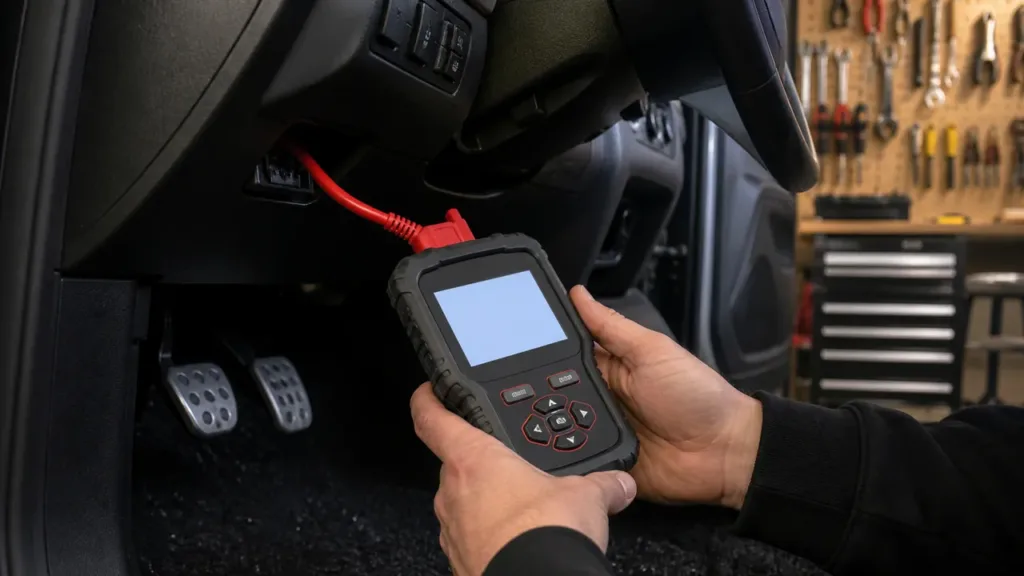
There are few moments more frustrating for a home mechanic than a stubborn check engine light that refuses to give up its secret. Maybe you pulled into the garage after a long drive and the dash lit up, or you failed an emissions test because a monitor never completed. Those are the situations that push people to search for the best diagnostic scanner for home mechanic use. Buyers want something that reads codes clearly, shows live sensor data you can trust, and saves time and money on repair shop visits.
Common mistakes happen fast. People buy the cheapest Bluetooth dongle without checking vehicle coverage, or they choose a tool that only reads engine codes while the problem sits in ABS, SRS, or transmission systems. Others assume an app will replace a proper handheld scanner, then get stuck when their car needs special resets or active tests. What matters most when choosing is a balance of compatibility, level of access (engine-only versus full-system), and ease of use. Some DIYers want one-button simplicity and smartphone convenience. Others want dealer-level features like bidirectional tests and service resets.
Different buyers will prioritize different things. If you want a simple, durable code reader for routine checks, one model will be ideal. If you plan to rebuild engines, replace modules, or perform brake bleeding at home, a bidirectional all-system scanner is the right choice. For most home mechanics who want the broadest capabilities and long-term value, a mid-to-high-tier unit is usually the best investment. My top overall pick for serious DIYers in this roundup is the Autel MaxiCOM MK808Z because it blends OE-level access with a polished interface and wide 2026 model coverage.
If you are short on time, the comparison table below gives a fast overview of the top options and links to each detailed review so you can jump straight to the model that looks right for you.
Best Diagnostic Scanner For Home Mechanic Comparison Table
| Product | Best For | Main Strength | Key Specs |
|---|---|---|---|
| Autel MaxiCOM MK808Z | All-System Professional | OE-level diagnostics, 28+ service functions | Android, Wi‑Fi, Bidirectional, 64GB |
| TOPDON ArtiDiag900 Lite | Wireless Workshop-Grade | 8-inch touchscreen, wireless VCI, active tests | Android 11, Bluetooth 5.0, 10000mAh |
| THINKCAR THINKSCAN 662 | Bidirectional Value | Active tests, 12 resets, friendly UI | 6.2″ screen, Android, 4150mAh |
| XTOOL D6 | Budget Full-System | 15 resets, AutoVIN, CAN FD | 5.45″ touchscreen, 64GB, 3150mAh |
| BOSSCOMM IF745 | All-Systems Home Shop | Large 7″ display, multi-language, 6 resets | Wi‑Fi updates, AutoVIN, lifetime updates |
| AERMOTOR V880 | Smog-Prep & Live Data | Huge DTC library, recording/playback | 2.8″ color, live data, lifetime updates |
| FOXWELL NT301 | Beginner/Budget Engine Reader | Simple, rugged, I/M readiness hotkeys | 2.8″ color, O2 & EVAP tests, plug-and-play |
| FIXD Bluetooth | Phone-Based Convenience | App explanations, always-on in the car | Bluetooth, app, smartphone integration |
| VDIAGTOOL D100 | Wireless Bidirectional Mid-Range | Active tests via phone, 17 resets, J2534 option | Bluetooth, lifetime updates, phone app |
If you would like a closer look at what separates these scanners, the detailed reviews below explain strengths, real-world use, and which model suits specific home-mechanic priorities.
1. Best Overall: Autel MaxiCOM MK808Z

One reason this option stands out is the MK808Z’s ability to behave like an OEM tool without demanding an OEM price. I remember a Saturday when a friend’s Jeep refused to enter gear after a sensor swap. We used the MK808Z to run active tests and watch live PIDs while we reprogrammed the crank angle relearn. The tablet-like interface felt familiar, and the tool completed the relearn that would have otherwise required a dealer visit.
For buyers who prioritize broad coverage and future-proofing, this Autel offers OE-level access across engine, transmission, ABS, SRS, and many modules, plus 28+ service resets. Another scenario: prepping a used car for sale, I ran a full-system AutoScan and exported a PDF report to the buyer, which saved hours of back-and-forth and built trust. It’s an investment for the DIYer who wants to diagnose complex faults and handle calibration tasks after parts replacement.
Pros
- Comprehensive all-system diagnostics and active tests.
- 28+ service functions to handle most maintenance tasks.
- Strong hardware with Android OS and ample storage.
- Wide 2026 model coverage and FCA SGW bypass support.
- Professional report export and detailed live data views.
Cons
- Higher cost than basic code readers.
- Some advanced OEM-level functions may require account setup or extra steps.
- Larger tablet form factor is less pocketable for quick scans.
This is the scanner for a home mechanic who wants to stop guessing and start proving fixes. If you change sensors, modules, or perform service resets, the MK808Z reduces trips to the shop. It is overkill if you only check engine codes and readiness, but for regular diagnostics and calibration work it pays back fast in saved labor and parts replacements.
To buy this product, click here.
2. Best Premium Wireless: TOPDON ArtiDiag900 Lite

If your garage feels like a small workshop with cables everywhere, wireless diagnostics change how you work. I used the ArtiDiag900 Lite once when diagnosing an intermittent blower motor on a winter night. Moving around the car without being tethered let me command the blower while standing behind the dash, and the active test quickly proved the blower motor had intermittent contact. That hands-free freedom matters more than you expect.
For buyers who prioritize a premium display and a wireless workflow, TOPDON delivers an 8-inch touchscreen and Bluetooth VCI that reach up to about 33 feet. Another scenario: diagnosing electric windows on a hot day while the car is in the driveway. The wireless VCI saved time and let me trigger actuators while watching PIDs. It’s a strong choice for home mechanics who want near-workshop comfort and active testing in a portable package.
Pros
- Wireless Bluetooth VCI for untethered diagnostics.
- Large touchscreen and fast hardware for fluid navigation.
- OE-level full system scanning and active tests.
- Good battery life and solid coverage through 2026 models.
- DTC repair guides and printable reports.
Cons
- Price sits in the premium range for advanced home users.
- Some brand-specific features may require updates or subscriptions.
Choose the ArtiDiag900 Lite if you value a wireless, tablet-like experience and often perform tests that benefit from mobility around the vehicle. It shines in situations where reach and comfort improve diagnostic accuracy. If you rarely need active tests, a simpler tool may be more cost-effective.
To buy this product, click here.
3. Best for Bidirectional Value: THINKCAR THINKSCAN 662

For buyers who prioritize active testing without a heavy price tag, the THINKSCAN 662 delivers a compelling middle ground. I used the 662 on a car with a suspected stuck injector; the bidirectional injector buzz test confirmed which injector was sluggish. Another time it helped with a steering angle calibration after replacing a sensor, which saved a calibration visit to a shop and the associated bill.
This model earns a place because it gives mechanics access to 12 useful reset functions and bidirectional control that you usually see only in pricier tools. The UI blends touchscreen and buttons, which makes it intuitive in a greasy-finger garage environment. It is a solid pick for weekend warriors who want true active testing and everyday resets without choosing a giant tablet tool.
Pros
- Bidirectional active test capability at a mid-range price.
- 12 practical reset functions for maintenance and calibration.
- Large HD screen and robust hardware for quick scanning.
- Lifetime updates and wide vehicle coverage.
- User-friendly interface with helpful diagnostics records.
Cons
- FCA AutoAuth features may require separate registration or fees.
- Not as feature-packed as top-tier professional tablets.
Home mechanics who do regular maintenance, sensor replacements, and occasional active tests will find the 662 hits a sweet spot. It reduces diagnostic guesswork and performs many of the resets that otherwise require a shop visit. Skip it if you only want the simplest code reader for readiness checks.
To buy this product, click here.
4. Best Budget Full-System: XTOOL D6

If your goal is to move beyond intermittent code checks and into full-system scans on a budget, the XTOOL D6 is a compact workhorse. I used a D6 to run an AutoVIN and four PIDs while troubleshooting a rough idle; the ability to compare multiple live streams made it obvious the MAF readings were off under load. That real-time comparison saved hours of part swaps.
This model stands out because it offers 15 relearn/reset functions and wide system coverage while staying affordable. Another real-world use: doing an oil service and then performing the necessary oil reset and injector coding on the same visit. For DIYers who want feature depth without a professional price, the D6 is a pragmatic choice.
Pros
- Dealer-level reset and relearn functions for a lower price.
- AutoVIN and multi-PID live-data display for effective troubleshooting.
- Lifetime free updates and solid brand support.
- Portable touchscreen, rugged design for garage use.
Cons
- Some advanced functions may not work on every manufacturer or model.
- Screen size is smaller than full tablet-style tools.
Buy the XTOOL D6 if you want access to relearns and resets that typically cost shop time, but you do not need a full tablet scanner. It is a great upgrade from entry-level readers and ideal for home mechanics who prefer to do most of their maintenance themselves.
To buy this product, click here.
5. Best For All-Systems Home Shop: BOSSCOMM IF745

This scanner is for the DIYer who wants a full-system checker with a big screen and straightforward menus. One Saturday I used the IF745 to trace a traction control fault that popped only under cornering. The unit’s all-systems readout located the fault in the stability module and the freeze-frame capture nailed the timestamp that matched my test drive.
Another scenario where it shines is getting ready for a smog check. The IF745’s one-tap I/M readiness and exhaustive DTC lookup made the readiness report easy to understand, and the large display reduces squinting in bright garage light. It’s a well-rounded tool for a home shop handling a range of vehicles and systems.
Pros
- All-system diagnostics with AutoVIN and a 7-inch display.
- Wi‑Fi updates and lifetime free updates for long-term value.
- Good language support and a user-friendly interface.
- Comprehensive DTC translation and live data streaming.
Cons
- Does not support bidirectional control or module coding.
- Large footprint is less convenient for roadside quick checks.
Choose the IF745 if you need full-system visibility and value the larger display and interface. It fits garages where multiple vehicles are worked on and where clear, shareable diagnostic reports matter. If you need active actuator tests, consider a bidirectional model instead.
To buy this product, click here.
6. Best for Smog Prep and Live Data: AERMOTOR V880
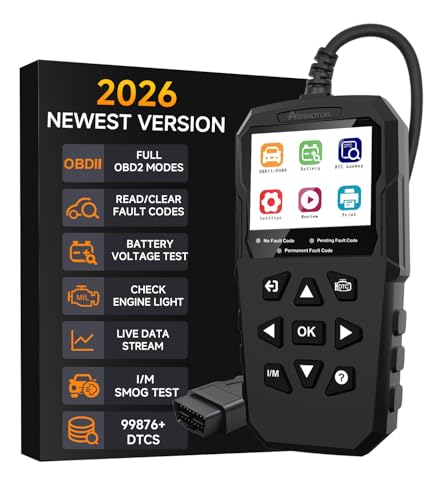
If you dread a failing emissions test, this is the sort of tool that calms that anxiety. One morning I used the V880 to run an EVAP leak test and watched the waveform while manipulating the purge valve. The clear I/M readiness screen and the huge built-in DTC library made the diagnosis straightforward, and I avoided a failed smog test the same week.
Another practical scenario is intermittent sensor issues. The V880’s data recording and playback feature caught a short-lived oxygen sensor dip that occurred only under certain throttle inputs. Exporting the recorded data to a PC let me show a specialist the exact moment of the glitch, which made the repair quicker and cheaper.
Pros
- Extensive DTC library and professional-grade EVAP testing.
- Live data recording and playback for intermittent problems.
- Rugged housing and lifetime firmware updates.
- Dedicated hotkeys for quick smog readiness checks.
Cons
- Smaller screen than tablet devices for multi-PID comparison.
- Focuses on engine systems; not a full bidirectional tablet tool.
The V880 is ideal if emissions testing and tracking elusive engine faults are your main needs. It’s a step above basic code readers for anyone prepping for smog tests or who wants the ability to capture and analyze intermittent data without spending on a full tablet scanner.
To buy this product, click here.
7. Best Beginner: FOXWELL NT301

This compact tool earns a place on many home-garage shelves because it makes the most common checks easy. I once recomposed a nervous neighbor who was afraid a check engine light meant catastrophic failure. Plugging in the NT301, reading the code and seeing the I/M readiness lights helped us decide it was a minor EVAP-related fault. The green/yellow/red indicator makes smog-prep checks intuitive for folks who are new to diagnostics.
Another scenario: a weekend DIY brake job where the only need was to confirm the engine was clear before reassembly. The NT301’s instant live data and the simple interface make it perfect for owners who want reliable, no-frills engine diagnostics and readiness status. It is a plug-and-play option that gives confidence without complexity.
Pros
- Simple, rugged, and ready out of the box.
- Live data graphing and EVAP/O2 tests for engine troubleshooting.
- I/M readiness LED makes smog checks fast.
- No batteries or apps required.
Cons
- Does not support ABS, SRS, or advanced reset functions.
- Limited to basic OBDII modes, so not for heavy calibration tasks.
Buy the NT301 if you want a dependable, easy-to-use reader for engine codes and emissions readiness checks. It is low-friction for beginners and a reliable second tool for experienced DIYers who mainly need engine-level data.
To buy this product, click here.
8. Best For Smartphone Convenience: FIXD Bluetooth

For people who live on their phones and want a low-effort way to track vehicle health, app-based dongles can be a smooth fit. I installed a FIXD in a friend’s commuter car and the app provided plain-language explanations and maintenance reminders that removed a lot of guesswork. When a check engine code popped, FIXD’s app gave a simple severity rating and a short explanation I could forward to the mechanic.
Another common scenario is monitoring a family fleet. FIXD’s ability to save multiple cars and push alerts made it easy to keep tabs on my sister’s car while she traveled. It’s convenient and tiny, and for many DIYers the app’s clarity and cloud features will be enough to avoid unnecessary trips to the shop.
Pros
- Convenient Bluetooth dongle with clear smartphone app explanations.
- Unlimited scans via app and multi-vehicle management.
- Good for basic diagnostics, maintenance reminders, and car buying checks.
- Very portable and unobtrusive under the dash.
Cons
- Not a substitute for an all-system scanner or bidirectional tool.
- Features and depth depend on the mobile app, and advanced diagnostics require paid upgrades.
Pick FIXD if you want frictionless monitoring and clear, non-technical explanations. It is ideal for busy owners who need quick answers and alerts, not for mechanics who need active tests or service resets.
To buy this product, click here.
9. Best Wireless Bidirectional Mid-Range: VDIAGTOOL D100

For the tech-savvy home mechanic who prefers diagnosing from a phone or tablet, the VDIAGTOOL D100 provides bidirectional control through a wireless interface. On a late-night troubleshooting session, I used the D100 to command an A/C clutch and verify actuator movement while watching PIDs on my phone. That level of interaction from a handheld device made the repair straightforward.
Another practical example is performing relearns after an ABS bleed. The D100 supports many relearn and reset functions and offers an option for J2534 pass-thru programming if you need advanced OEM software later. It is a flexible choice for users who want powerful features without carrying a full tablet scanner.
Pros
- True bidirectional control via wireless connection to phone or tablet.
- 17+ reset functions and extensive live-data displays.
- Lifetime updates and broad brand coverage.
- Optional J2534 pass-thru and subscription-based expandable features.
Cons
- Some advanced functions require paid subscriptions or extra fees.
- Relies on phone/tablet compatibility and app stability.
This is a strong pick if you prefer the convenience of phone-based diagnostics with the muscle of active tests and resets. It balances portability with serious capability, but be aware of optional fees for certain advanced features.
To buy this product, click here.
Best Diagnostic Scanner For Home Mechanic FAQ
How do I know which scanner will work with my car?
Start by checking your vehicle’s year and whether it has a standard 16-pin OBD2 port, which is the case for most cars made since 1996 in the U.S. Beyond that, look at tool coverage notes for specific systems and manufacturers. If you own a brand with special security gateways, check for AutoAuth or FCA support. When in doubt, match the scanner’s listed vehicle model years and protocols (CAN FD, DoIP) to your car before buying.
Do Bluetooth dongles give the same information as handheld scanners?
Bluetooth dongles and handhelds can both read standard OBDII engine codes, live PIDs, and readiness status. The difference is depth and convenience. Handheld or tablet-style scanners often provide all-system access, active tests, and service resets. Dongles prioritize convenience and readability through an app. Choose a dongle for daily monitoring and a handheld/tablet if you need repairs and calibrations.
What is bidirectional control and why would a home mechanic need it?
Bidirectional control lets the scanner send commands to vehicle components, such as toggling injectors, cycling fans, or activating actuators for testing. For home mechanics replacing sensors or diagnosing component function, bidirectional capability shortens trial-and-error and confirms repairs without disassembly. It is especially useful for electrical actuators and calibration tasks.
Are firmware updates important?
Yes. Firmware updates expand vehicle coverage, improve compatibility with new models, and sometimes add new reset functions. Tools that include lifetime updates offer better long-term value. Regular updates are useful if you diagnose newer cars or unusual models.
Can a home mechanic use these tools to program modules?
Most consumer-level scanners do not include full programming or ECU flashing. Some advanced tools offer J2534 pass-thru capability as an add-on, which allows OEM software to be used for module programming. Programming usually requires extra software and sometimes paid licenses, so confirm whether the scanner supports pass-thru and what additional costs may apply.
How important is live data recording and playback?
Recording live data is very valuable when you chase intermittent issues that do not occur on demand. Capture the signal during a test drive or specific condition and analyze it later or share it with a technician. This feature makes diagnosing hard-to-reproduce faults much easier.
Which scanners are best for emissions readiness?
Tools with dedicated I/M readiness hotkeys and clear readiness displays are most convenient. Many models in this roundup, including the FOXWELL NT301, AERMOTOR V880, and BOSSCOMM IF745, have explicit readiness functions. If smog tests are a frequent concern, prioritize a scanner with clear readiness reporting and EVAP/Mode 6 support.
Do I need a scanner with physical buttons or a touchscreen?
Both types work. Physical buttons can be more durable when fingers are greasy and for quick one-handed operation. Touchscreens offer faster navigation and larger displays for multi-PID views. Consider your garage conditions and personal preference when choosing the interface.
Final Verdict
For most dedicated home mechanics who want the broadest capability and the option to handle calibration and post-repair work, the Autel MaxiCOM MK808Z is the top overall pick. It provides OE-level diagnostics, a wide suite of service functions, and the hardware to stay useful across many vehicles through 2026. If your priorities include active testing, module calibration, and creating professional diagnostic reports, the MK808Z is worth the investment.
If your budget is tighter, or you only need engine-level checks and emissions readiness, the FOXWELL NT301 or the AERMOTOR V880 deliver excellent value and reliability. For a balanced bidirectional option at mid-range price, the THINKCAR THINKSCAN 662 and TOPDON ArtiDiag900 Lite give you active tests and resets with friendly interfaces. Ultimately, match the scanner to how you work: pick a simple engine reader if you mostly confirm codes and readiness, choose a mid-tier bidirectional tool if you perform regular repairs and relearns, and select a tablet-style professional scanner if you want near-dealer access at home.