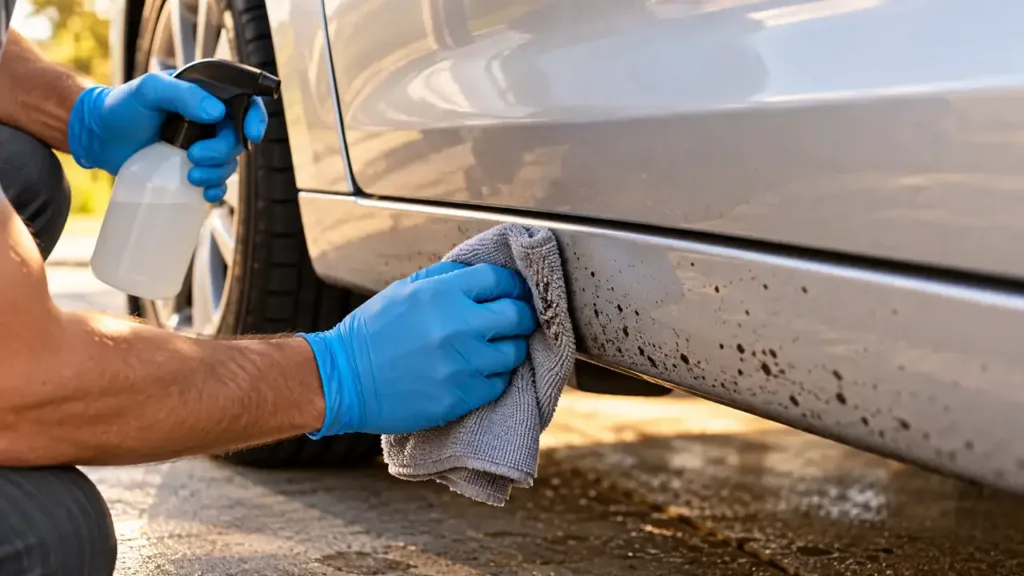
Black dots along lower doors and rocker panels can remain after an otherwise thorough wash. Tar removers are designed for sticky road residue that shampoo may not release, helping reduce the temptation to scrub hard with a towel or mitt. The product must still suit the paint and nearby materials.
The best tar remover for car paint depends on the deposit, the finish, and whether the panel carries plastic trim, PPF, a wrap, or a repair. A dedicated solvent spot remover and a wash-bucket pre-treatment are not interchangeable products, even when both mention bug and tar removal.
We compare those uses openly and highlight explicit exclusions. Citrus-derived or water-based wording does not make a product universally safe. Start with the current label, a cool surface, controlled application, and the least aggressive process that removes the actual deposit. These recommendations compare documented product features and current listed configurations, not hands-on test results. Verify the exact model and instructions before purchase. This article contains affiliate links; qualifying purchases may earn the site a commission.
Quick Answer
Start with the first option for the most balanced documented feature set, then use the alternatives below when their particular configuration better matches your job. Compatibility and the stated limitations take priority over the ranking.
- Best Overall: Stoner Tarminator 91154 — Tar and asphalt removal; sap-removal use.
- Best for a Trigger-Spray Tar Remover: CARPRO TarX — Tar and adhesive removal; orange-peel-derived solvent claim.
- Best for a Coating-Care Decon Process: GYEON Tar — Road-tar removal; adhesive residue use.
Best Tar Remover for Car Paint Comparison Table
| Product | Best For | Product / Application Format | Main Residue Role | Check Before Buying |
|---|---|---|---|---|
| Stoner Tarminator 91154 | Best Overall | Ready-to-use aerosol | Tar, asphalt, sap | Can affect existing protection |
| CARPRO TarX | Best for a Trigger-Spray Tar Remover | Trigger bottle with solvent formula | Tar and adhesive residue | Solvent chemistry needs surface checks |
| GYEON Tar | Best for a Coating-Care Decon Process | Dedicated tar-removal spray | Tar, sap, adhesive residue | Verify wrap and plastic restrictions |
| Gtechniq W7 | Best for Explicit Surface Exclusions | Full-strength solvent | Tar and glue spots | Listing excludes plastics and PPF |
| Adam's TAR | Best for Concentrated Spot Treatment | Ready-to-use spot solvent | Tar, asphalt, adhesive residue | Small bottle for broad coverage |
| Griot's Garage Tar and Sap Remover | Best for a Larger Trigger Bottle | Trigger-spray d-Limonene blend | Tar and sap | Not intended for PPF or vinyl wraps |
| Rain-X Pro 620213 | Best for a Water-Based Multipurpose Option | Water-based spray | Bug, tar, adhesive residue | Broad exterior claims need spot testing |
| Armor All Extreme Bug and Tar Remover | Best for a Pre-Wash Treatment | Pre-treatment spray | Bug and tar spots | No universal finish guarantee |
| Chemical Guys Bug and Tar Pre-Wash | Best for Wash-Bucket or Foam-Cannon Use | Bucket / foam pre-wash | Broader bug and tar pre-treatment | Different use case from a spot solvent |
1. Stoner Tarminator 91154 — Best Overall

Tarminator is a focused choice for sticky road deposits that ordinary shampoo leaves behind. Its aerosol format makes localized treatment easy, especially along lower body panels. A ten-ounce aerosol is useful for a tool shelf where tar removal is an occasional localized task. Its stated tar, asphalt, and sap uses identify the contamination being targeted more clearly than a general exterior-cleaner label. The format also allows the user to compare a pressurized spray with a trigger bottle before deciding which is easier to control around the affected panel.
Use the smallest effective amount and remove the softened contamination gently. It is a cleaning solvent, not a polish, so additional rubbing after the deposit releases adds risk without improving the paint finish. Stoner is particularly relevant when ordinary washing has left discrete sticky deposits on compatible paint. Broader bug pre-washing is a different job and may favor another product format. Check the current restrictions for nearby plastic, film, and repaired surfaces before spraying. Follow the can's storage and handling directions, and use a clean removal towel so softened tar is not spread over a larger area.
Pros
- Tar and asphalt removal
- Sap-removal use
- Aerosol application
- Clear-coat use listed
- Ten-ounce can
Cons
- Can affect existing protection
- Check restrictions on plastics and films
To buy this product, click here.
2. CARPRO TarX — Best for a Trigger-Spray Tar Remover

TarX is useful when you prefer a trigger bottle for targeted tar and adhesive cleanup. Citrus-derived solvents are still solvents, so the ingredient story should not be mistaken for unrestricted surface safety. The supplied sprayer makes the 500mL TarX configuration a complete trigger-bottle option rather than a refill alone. Orange-peel-derived solvent chemistry explains part of the product's positioning without making it a mild all-purpose cleaner. Its tar and adhesive role is most relevant where sticky contamination needs chemical softening before gentle removal.
Work in small areas and inspect the result after rinsing or cleaning as directed, rather than coating the entire vehicle and leaving it unattended. CARPRO is worth comparing when controlled trigger application suits the workspace better than an aerosol. The bottle size also makes the remaining supply easier to plan for a focused decontamination job. Keep the product away from materials excluded by the current instructions, even when the affected paint itself is compatible. Store it in the original identified container so a solvent product is not later mistaken for a routine water-based detail spray.
Pros
- Tar and adhesive removal
- Orange-peel-derived solvent claim
- 500mL bottle
- Sprayer included
- Exterior decontamination use
Cons
- Solvent chemistry needs surface checks
- Do not let it dry
To buy this product, click here.
3. GYEON Tar — Best for a Coating-Care Decon Process

GYEON Tar makes sense for an owner who wants a dedicated tar-removal step within a coating-maintenance process. It addresses sticky organic contamination rather than ferrous particles. Its focus on bonded tar, sap, and adhesive contamination makes GYEON a more specialized choice than a routine wash product. A spray format allows selected deposits to be treated without automatically applying solvent across an entire panel. That is useful in a maintenance workflow where most of the surface is already clean and only isolated contamination remains.
Even if a product is marketed for coatings, verify the exact label for films, repairs, and surrounding trim before spraying a lower panel where several different materials meet. GYEON is most relevant when its actual surface permissions match the finish being maintained. Coating-care branding should not be extended to an unknown wrap or repaired area without checking. Watch the work area during the permitted dwell period rather than interpreting slow removal as a reason for indefinite exposure. Follow the required cleanup before assessing the finish, because dissolved residue can otherwise obscure whether the tar spot has actually gone.
Pros
- Road-tar removal
- Adhesive residue use
- Sap application listed
- Paintwork decontamination
- Spray format
Cons
- Verify wrap and plastic restrictions
- Coating-safe language does not cover every surface
To buy this product, click here.
4. Gtechniq W7 — Best for Explicit Surface Exclusions

W7 provides unusually important exclusion information: the listing rules out plastics, PPF, wraps, and smart repairs. That makes it a conditional choice for suitable paintwork, not an all-exterior spray. A ready-to-use full-strength solvent avoids a dilution step, which helps keep its intended role distinct from a wash-bucket additive. The stated paint, wheel, and exhaust applications are separate material checks rather than a blanket exterior approval. Its 16.9-ounce configuration is useful to compare with small spot-treatment bottles when several suitable painted areas need attention.
Its usefulness depends on being able to keep application away from incompatible materials, especially on bumpers and lower panels where paint, trim, and protective film often sit together. Gtechniq is a clear conditional choice when the target and neighboring materials all meet its restrictions. A mixed bumper with plastic, film, and a repaired area can make that condition difficult to satisfy. Use the exclusion list to decide where another method is needed before applying the product. Keep W7 labeled and stored under its directions so the convenience of a ready-to-use solvent does not encourage casual use on an incompatible finish.
Pros
- Full-strength solvent formula
- Tar and glue removal
- Paintwork application
- Wheel and exhaust uses listed
- No mixing needed
Cons
- Listing excludes plastics and PPF
- Not for wraps or smart repairs
To buy this product, click here.
5. Adam's TAR — Best for Concentrated Spot Treatment
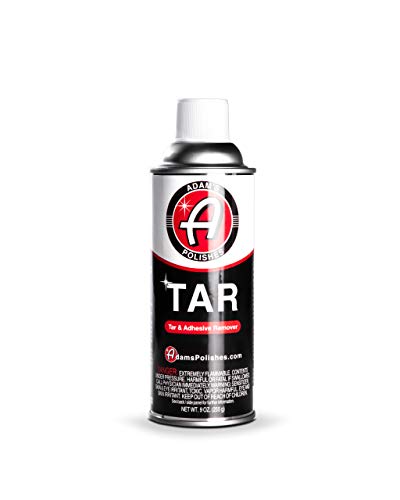
Adam's TAR is suited to isolated deposits rather than a substitute for washing the entire car. Its ready-to-use format removes dilution work, while the small container encourages targeted treatment. The nine-ounce bottle suits targeted contamination more naturally than broad wash coverage. Its listed solvent, citrus-oil, and alcohol formulation also distinguishes it from the water-based Rain-X alternative. Tar, asphalt, and glue residues are useful application categories to compare, but they should not be expanded into permission to remove every adhesive near trim or badges.
Follow with the required cleaning step and reassess protection on the treated area. A product capable of dissolving adhesive should not be assumed harmless to every decorative film or adhesive-backed badge. Adam's is an option for a buyer who wants a dedicated spot product and will use it selectively. The smaller supply is less convenient if repeated large areas are the normal workload. Confirm the current finish and material restrictions before working around protective film or adhesive-backed components. Complete the stated cleanup afterward and reassess the treated area rather than leaving solvent residue beneath a new layer of wax or protection.
Pros
- Ready-to-use solvent formula
- Tar and asphalt use
- Adhesive residue removal
- Citrus oils listed
- Paint and chrome applications
Cons
- Small bottle for broad coverage
- Existing wax may need renewal
To buy this product, click here.
6. Griot's Garage Tar and Sap Remover — Best for a Larger Trigger Bottle

Griot's offers a larger spray-bottle option with explicit PPF and wrap exclusions. That makes it easier to identify when to skip it before a routine decontamination job. A 22-ounce trigger bottle offers a different handling and quantity choice from small aerosol spot removers. The d-Limonene blend is a specific formulation detail relevant to its tar-and-sap purpose. Its express PPF and vinyl-wrap exclusions are particularly useful for ruling the product out before a protected panel is treated.
It is a sensible candidate for compatible painted lower panels, but check the materials around the tar spot instead of spraying across a mixed plastic-and-film area indiscriminately. Griot's is most persuasive for compatible painted areas where a larger trigger bottle will be used regularly. It is a less appropriate default when the vehicle carries film across the contaminated sections. Inspect the nearby trim and confirm the current permission for each material rather than treating most plastics as all plastics. Keep the bottle and clean application materials separate from ordinary wash equipment so sticky dissolved contamination does not migrate into a later contact wash.
Pros
- Twenty-two-ounce configuration
- d-Limonene blend
- Tar and sap removal
- Paint and chrome uses
- Most plastics listed
Cons
- Not intended for PPF or vinyl wraps
- Spot testing remains necessary
To buy this product, click here.
7. Rain-X Pro 620213 — Best for a Water-Based Multipurpose Option

Rain-X Pro combines several sticky-residue tasks in a water-based product. It is relevant when the main need is occasional spot cleaning rather than repeated heavy asphalt removal. The water-based formulation is a meaningful distinction from dedicated solvent tar removers in the same list. A 16-ounce spray bottle also suits occasional mixed-residue tasks where bug marks and adhesive traces appear alongside tar. That wider role can reduce shelf duplication, provided the actual deposit responds under the permitted process.
Compare it with a dedicated tar solvent based on the actual deposit and surface, not the number of tasks on the label. Repeated aggressive wiping is a sign to reassess the method. Rain-X is a sensible candidate when the need is varied light spot cleaning rather than repeated heavy asphalt removal. A dedicated solvent remains a different option to compare for stubborn compatible-surface deposits. Test an inconspicuous suitable area where the finish history is uncertain. If a spot does not soften under the instructions, reconsider the contamination and product category instead of continuing with harder rubbing.
Pros
- Water-based formula
- Tar and asphalt use
- Adhesive residue use
- Bug-removal application
- Sixteen-ounce bottle
Cons
- Broad exterior claims need spot testing
- Severe deposits may need a dedicated solvent
To buy this product, click here.
8. Armor All Extreme Bug and Tar Remover — Best for a Pre-Wash Treatment

Armor All fits a straightforward wash routine where bug residue and small tar spots need pre-treatment before the main wash. Its wax-preservation positioning may appeal to an owner maintaining existing protection, but it is not an assurance that every wax or coating remains unchanged. The spray format is easy to place within a normal pre-wash routine rather than treating tar removal as a separate full-vehicle service. Its listed bird-dropping and bug uses are relevant when several types of fresh exterior contamination are present together. Wax-preservation positioning may matter to a maintained finish, although the actual protective product and application conditions still need consideration.
Use it as directed and reassess the surface once the contamination has been removed. Armor All is more useful when the contamination can be addressed as a controlled pre-treatment. Thick hardened asphalt may call for a different product category or another approved approach. Check the surface temperature and label instructions before beginning so the cleaner does not dry while other wash equipment is being prepared. Use clean media for removal and complete the recommended wash step before judging whether any protection needs renewal.
Pros
- Bug and tar use
- Bird-dropping cleanup
- Pre-treatment application
- Spray-bottle format
- Wax-preservation claim
Cons
- No universal finish guarantee
- Label directions determine dwell time
To buy this product, click here.
9. Chemical Guys Bug and Tar Pre-Wash — Best for Wash-Bucket or Foam-Cannon Use

Chemical Guys fills a different role from the ready-to-use spot removers: a pre-wash product added to a bucket or foam setup. That can suit broader bug-contaminated areas before contact washing. Bucket and foam-cannon use place this Chemical Guys in a different part of the wash than a small tar-spot solvent. The concentrate format makes dilution and equipment compatibility part of the purchase decision. Its broader application can be useful when bug-contaminated front panels need pre-washing before a normal contact wash.
It should not be assumed to dissolve every hardened asphalt dot as quickly as a dedicated solvent, and the proper dilution is part of the product choice. Choose this product when the intended task matches that wash-stage role. Do not compare its bottle volume directly with a ready-to-use spot remover without considering how each is applied. Follow the current mixing instructions for the selected bucket or foam arrangement. After rinsing, inspect remaining isolated deposits so a separate tar treatment is chosen only where the broader pre-wash has not addressed the actual contamination.
Pros
- Pre-wash concentrate format
- Bucket use listed
- Foam-cannon use listed
- Bug and tar applications
- Rinsable wash process
Cons
- Different use case from a spot solvent
- Mixing instructions must be followed
To buy this product, click here.
Buying Guide
Identify the contamination first
Tar, tree sap, adhesive residue, rubber transfer, and paint damage can look similar from a distance. Wash loose dirt away and inspect the spot before treatment. A tar remover is not a scratch polish or a way to restore missing clear coat. If the area has changed color or texture after cleaning, stop and reassess rather than increasing pressure automatically.
For related background, see How to Remove Tree Sap From a Car Safely.
Check every material near the spot
Lower bodywork often combines paint, textured plastic, rubber, adhesive-backed trim, and film. Some tar removers explicitly exclude PPF, wraps, or plastics. A paint-safe claim does not cover those neighboring materials. Apply precisely, protect incompatible areas, and follow the current product and surface instructions, especially on refinished panels or uncertain repair history.
Choose a spot solvent or a pre-wash
A ready-to-use solvent is convenient for isolated asphalt dots. A bucket or foam-cannon product may be better suited to broader pre-wash use under its dilution instructions. Compare the role rather than expecting identical behavior. A wash concentrate's ability to loosen bug residue does not prove it will dissolve every hardened tar deposit as efficiently as a dedicated spot product.
Let the chemistry work without drying
Use the stated dwell time and remove softened contamination gently. Do not let the product dry or keep rubbing a resistant spot with a contaminated towel. A second controlled application may be appropriate if the label allows it, but repeated aggressive scrubbing can cause damage even when the chemical itself is compatible with the finish.
For related background, see How to Prevent Clear Coat Failure: A Complete Guide.
Clean the area and reassess protection
Follow the required rinse or wash step so dissolved residue and solvent are removed. Some products can affect waxes or other protective layers, so check the treated area before deciding whether protection needs renewal. Do not assume a tar remover prepares a panel completely for a coating; the protection manufacturer's full preparation process still applies.
Frequently Asked Questions
Can I use tar remover on PPF or wraps?
Only if the exact product and film instructions permit it. Several options here explicitly exclude those materials.
Is a citrus solvent harmless to plastic?
No. Ingredient origin does not establish material compatibility. Follow the label and test where appropriate.
Will a tar remover remove tree sap?
Some list sap as an intended use, but formulations and surface restrictions differ. Select for the actual deposit and finish rather than assuming every tar product is identical.
Can it remove a scratch that looks like tar?
It may remove transferred material, but it cannot replace missing paint or correct every scratch. Inspect the area after cleaning.
Should I clay tar spots first?
A suitable chemical treatment can reduce bonded sticky residue before physical contact. Use the appropriate process for the deposit and reassess whether clay is still necessary afterward.
Final Verdict
Stoner Tarminator is our overall spot-treatment starting point for suitable painted surfaces. CARPRO TarX offers a trigger-spray alternative, while Chemical Guys fills the different role of a bucket or foam pre-wash. Check films, plastics, repairs, and nearby trim before applying any tar remover; a product that fits the deposit can still be wrong for the surrounding material. Confirm the exact model, included components, compatibility, and current instructions before ordering.